Client:
Personal project
Specialisms:
Concept, Research, UX/UI, Art direction
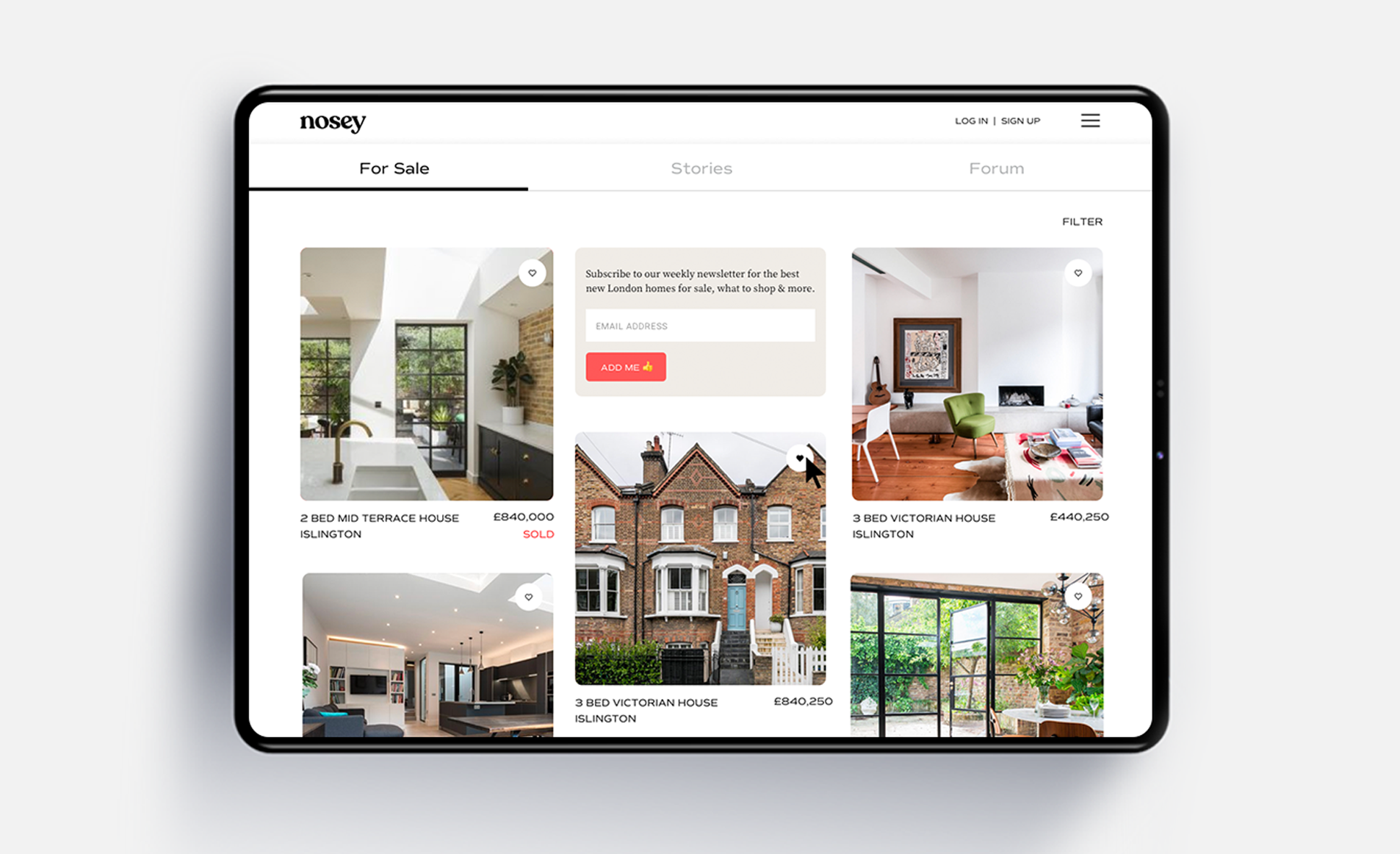
Nosey is a peer-to-peer home selling platform I conceived, researched, designed, and built with a developer — removing estate agents from the equation and connecting London buyers and sellers directly. It started as a personal observation about a broken market and became a fully functional MVP, live and tested with real users within two months of starting.
The problem
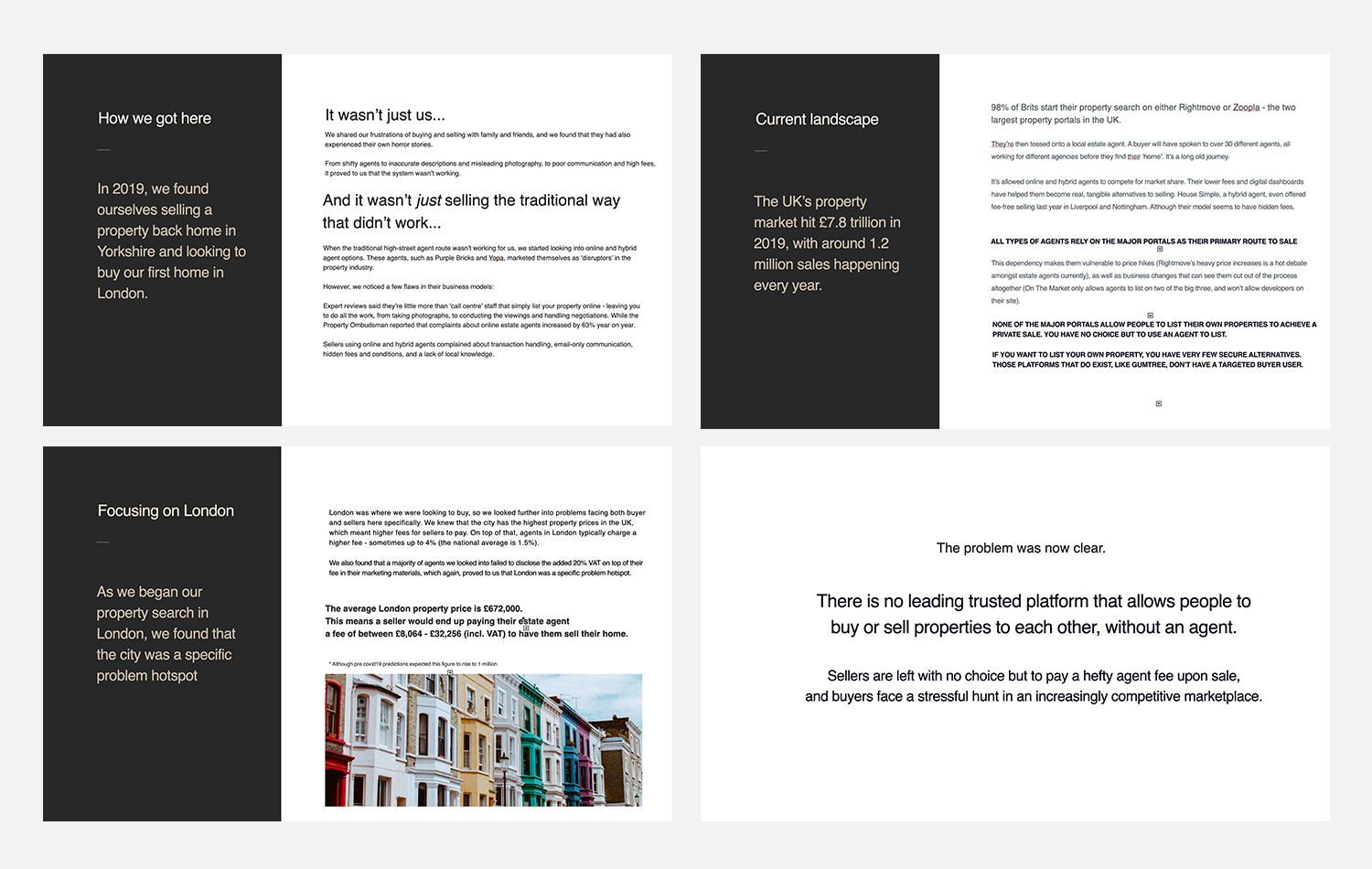
Traditional home selling in the UK often involves a complex web of intermediaries, causing delays, added costs, and frustration for both buyers and sellers. Recognising these pain points, we set out to redefine the experience.
Research
We conducted comprehensive research by engaging in interviews with both buyers and sellers to gain insights into the existing challenges within the buyer/seller journey. Our research methodology involved conversations with friends, family and colleagues who recently engaged in property transactions, as well as direct interactions by knocking on doors across London to comprehend the issues inherent in the current home-selling process.
Through these research methods, recurring themes emerged, highlighting the prevalent lack of trust in traditional agents. Both buyers and sellers expressed dissatisfaction with the intermediary role, emphasising the desire for direct communication.
Sellers, in particular, believed in their ability to showcase and sell their homes more effectively than agents, asserting a deeper understanding and authenticity. Buyers in London voiced concerns about feeling manipulated by agents, often perceiving the home-buying process as a sequential waiting game. Additionally, sellers pointed out the financial burden of expensive fees, a sentiment exacerbated by the high property prices in London.
The findings from this research not only resonated with our own observations but also served as a validation of the inherent issues within the conventional UK property model. To delve deeper into these challenges, I initiated the development of an MVP product, aiming to test and iterate upon potential solutions.
The solution
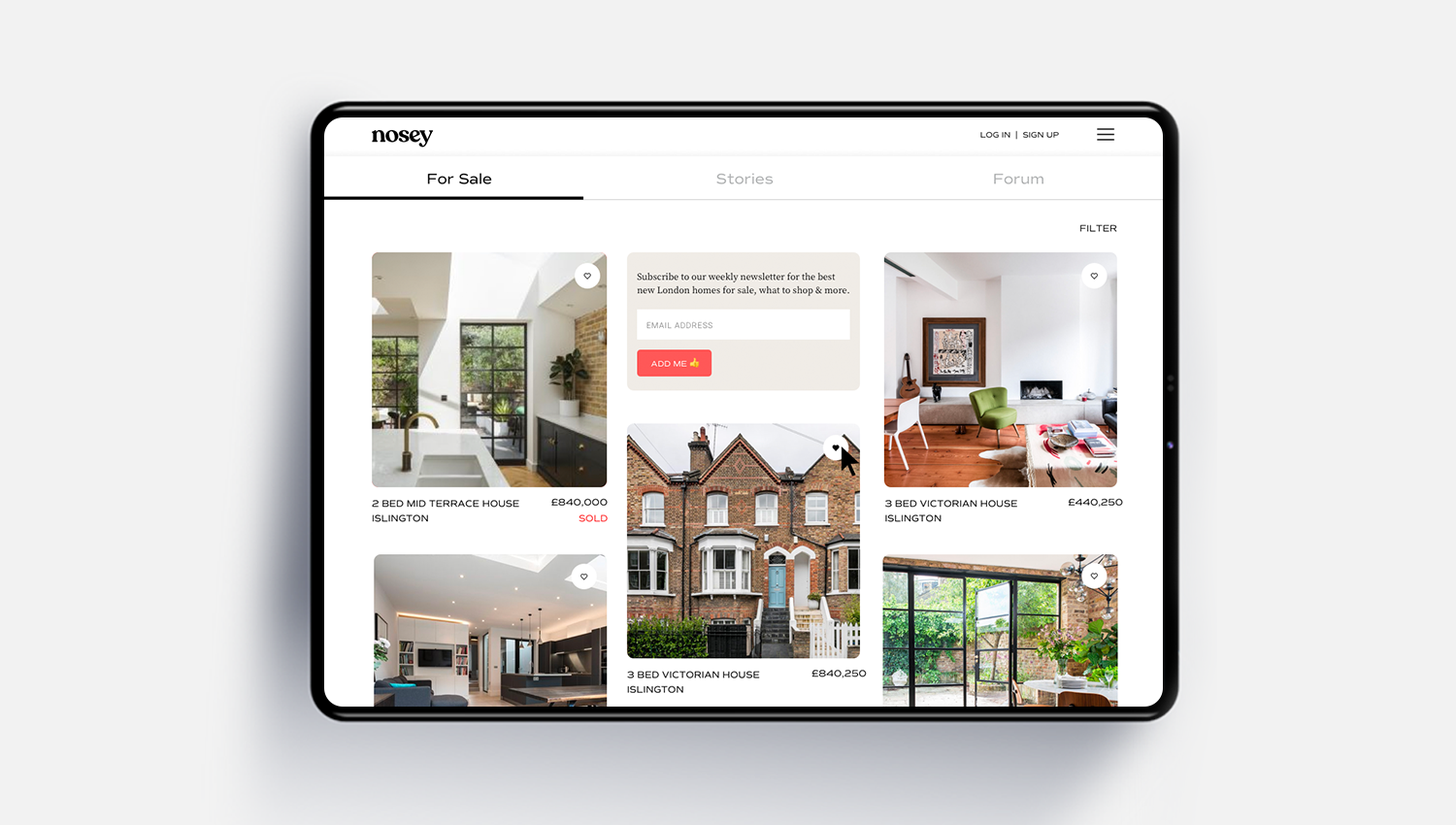
Nosey, a web based app, simplifies the home selling process by removing the ‘middleman’ and connecting buyers and sellers directly. Our platform offers intuitive tools for property listing, communication, and negotiation, putting the power back into the hands of homeowners.
Based on our research, we concluded that the app's success hinges on establishing a reliable community. Consequently, we opted to concentrate our efforts initially on London, a city boasting the highest number of properties for sale and the most elevated property prices, thereby resulting in the highest estate agent fees.
User flows & lo-fidelity
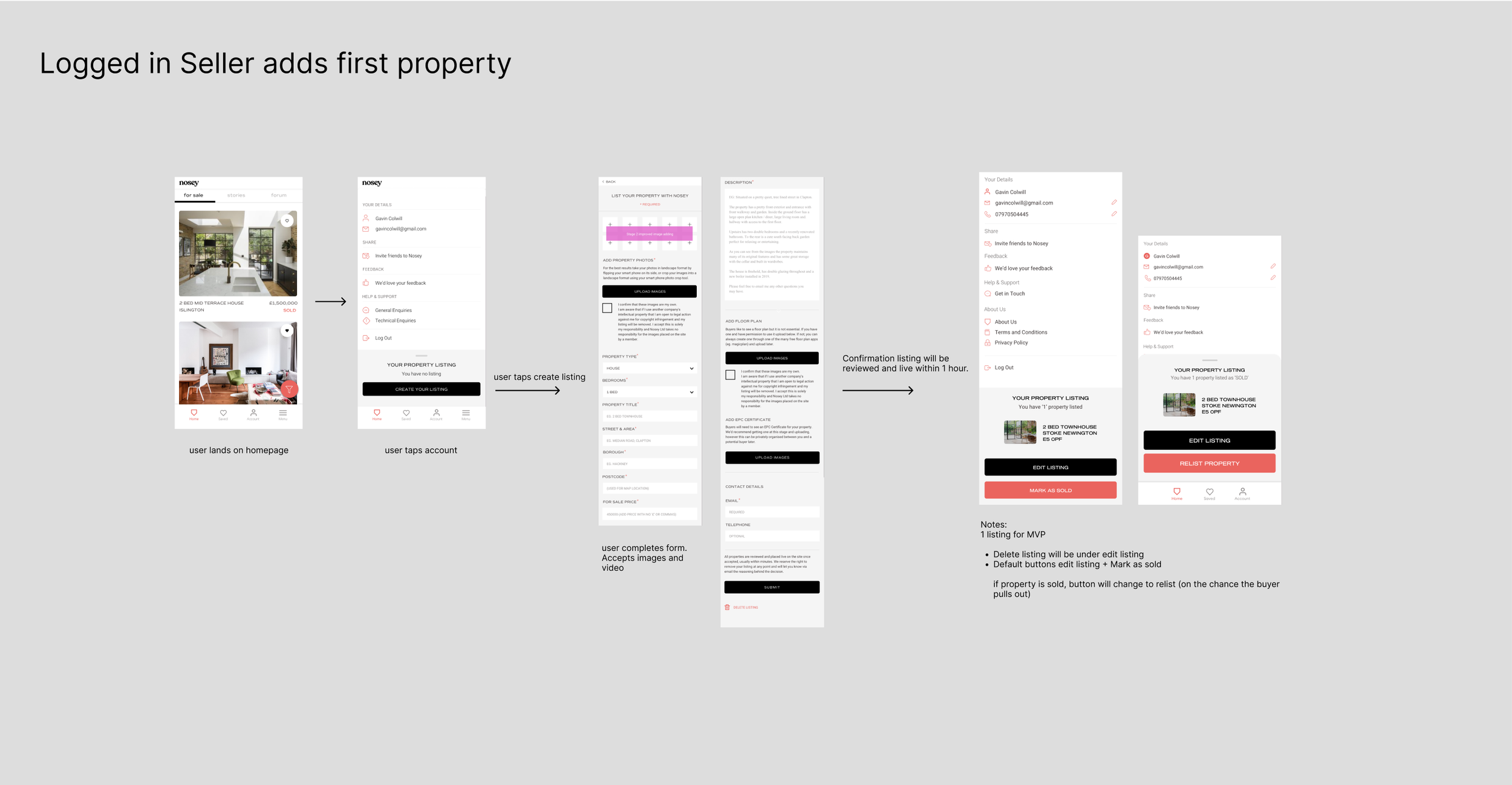
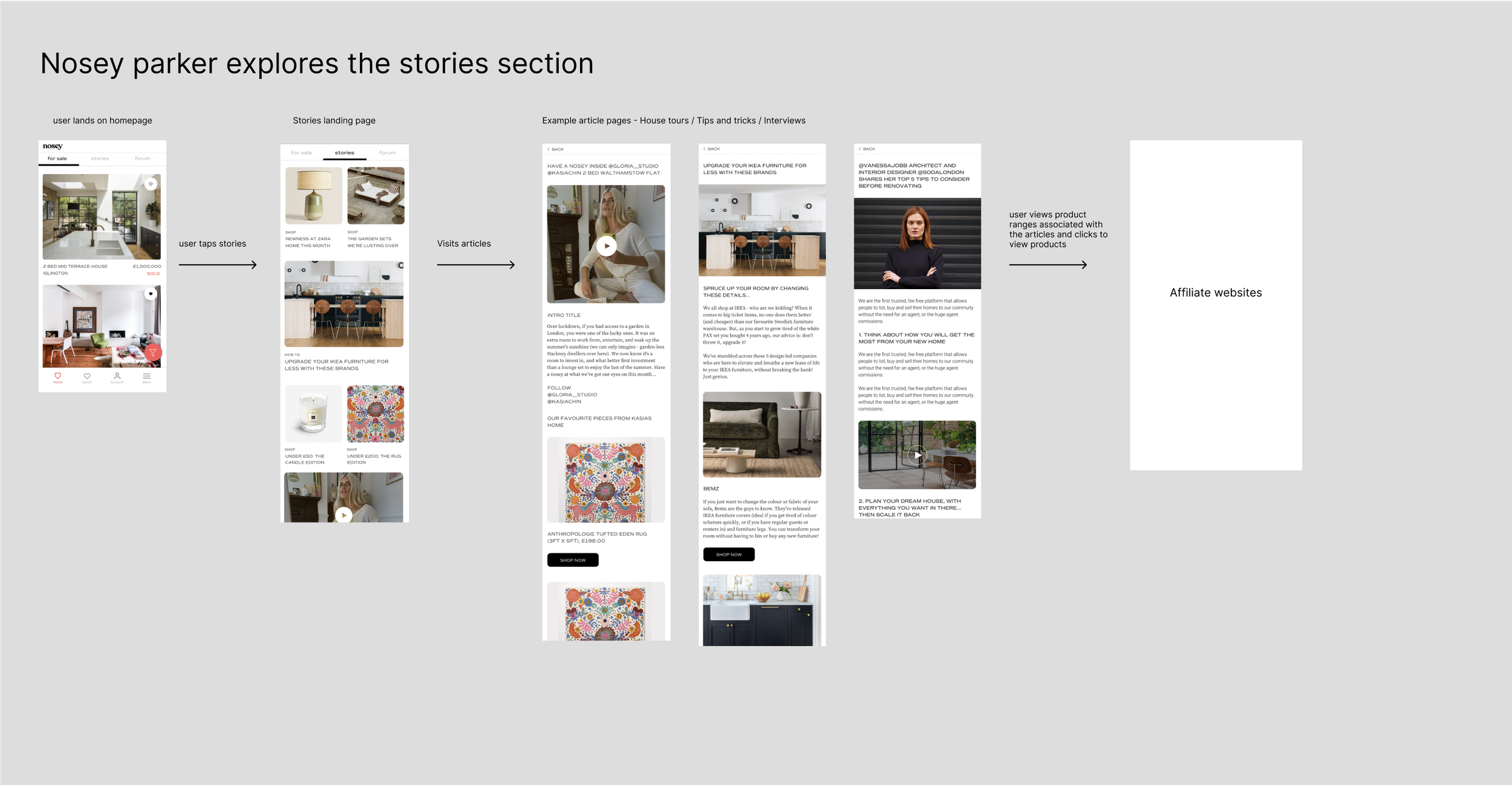
Design & Development
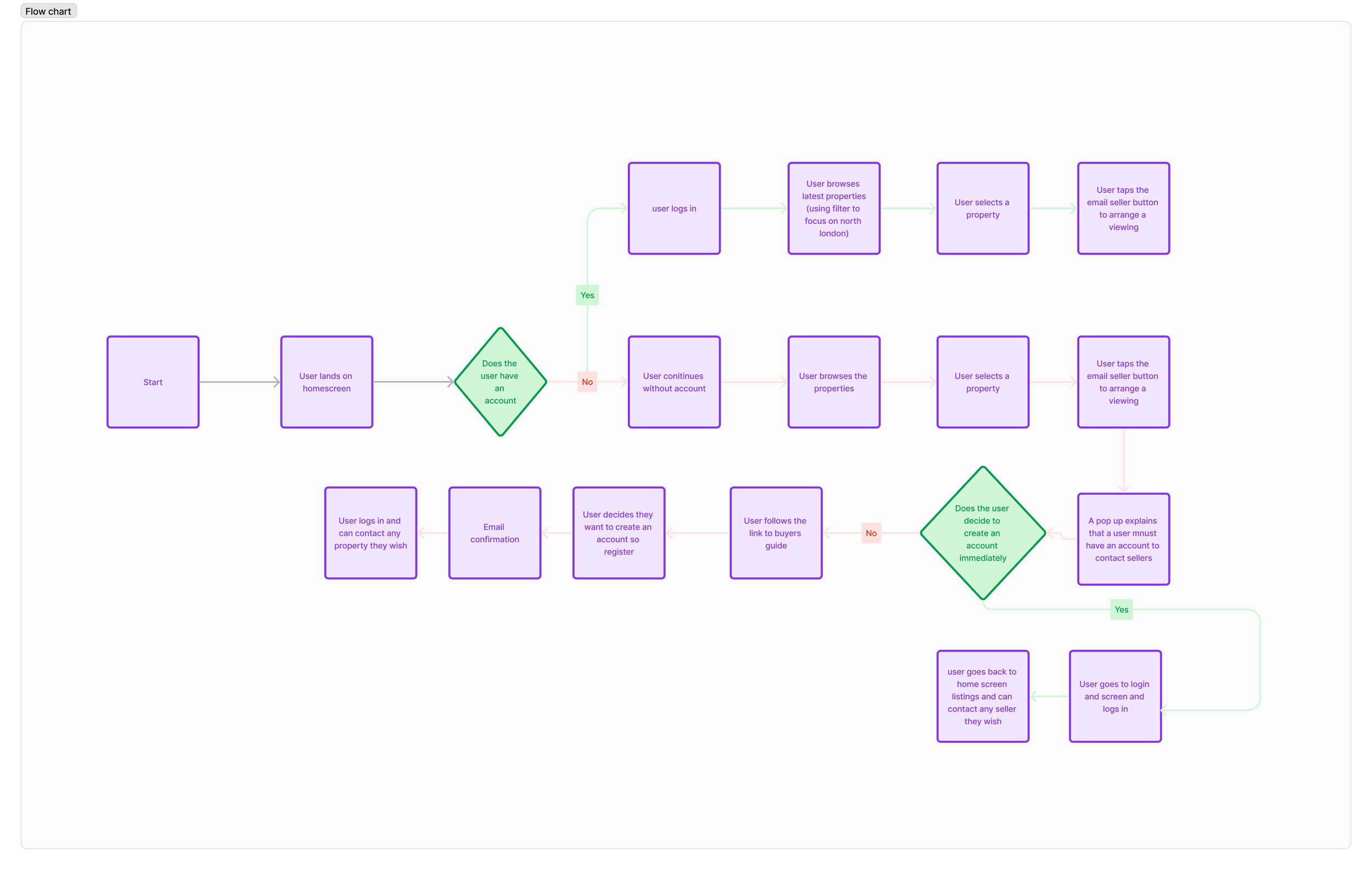
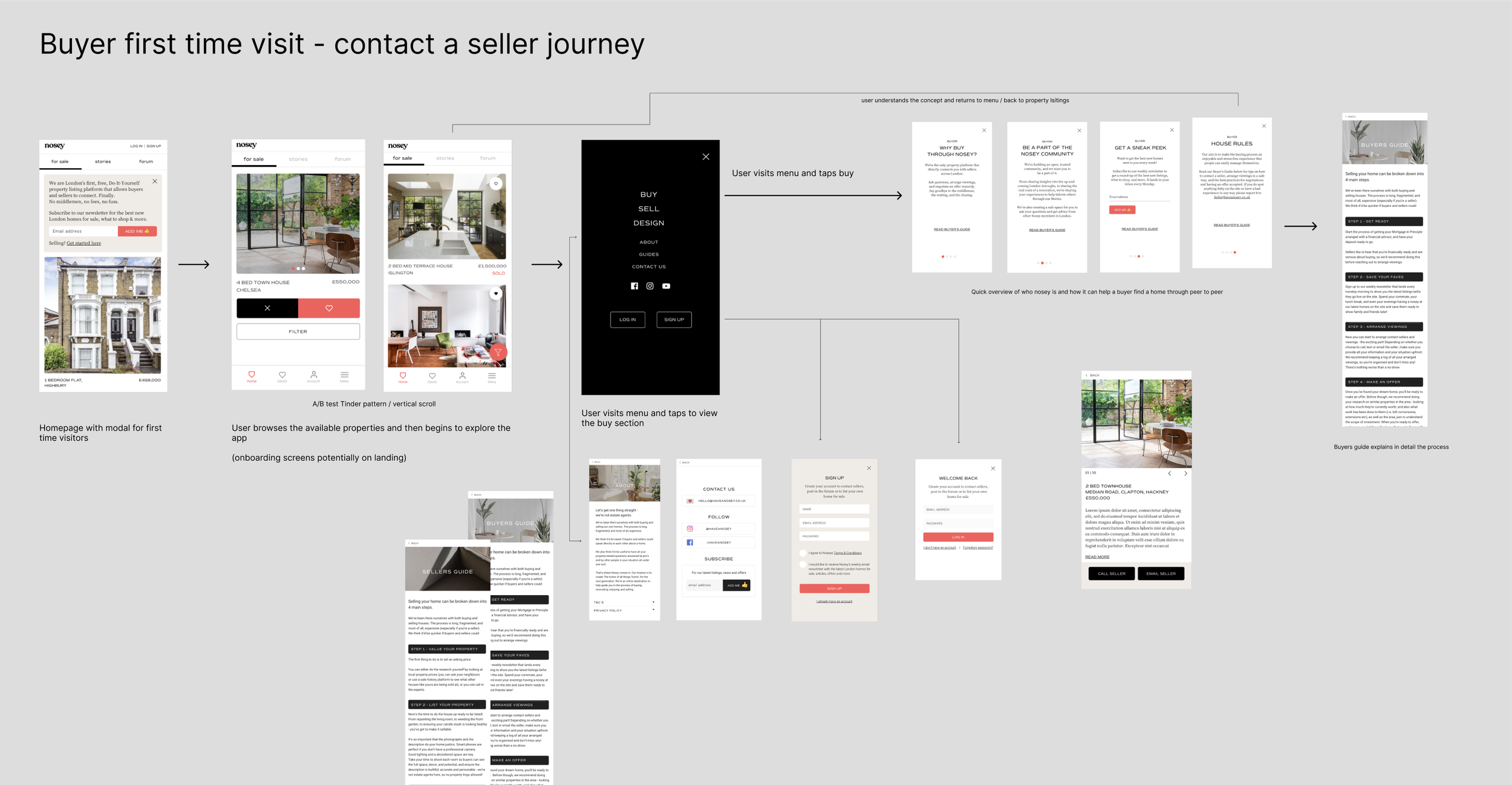
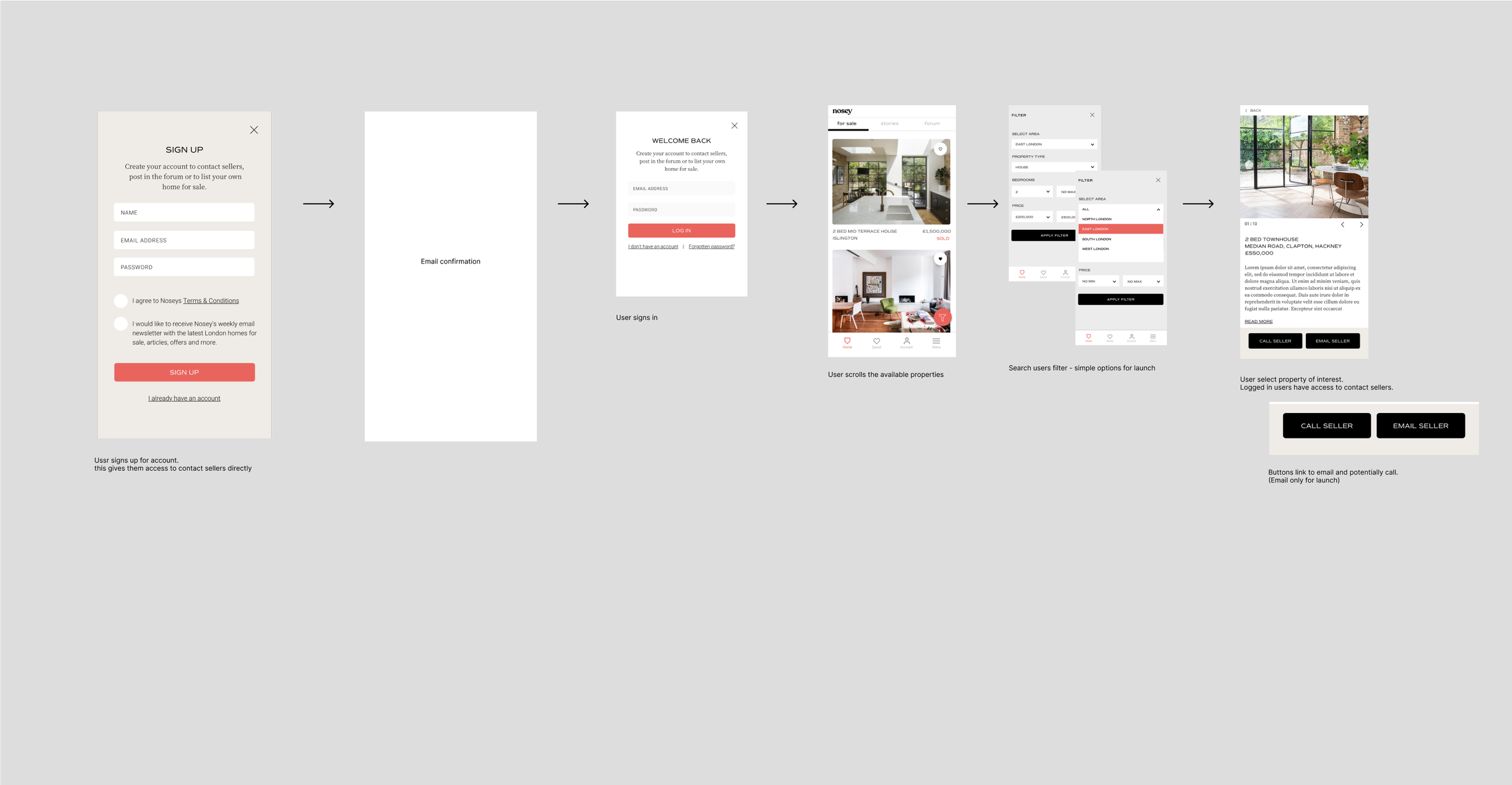
My developer and I successfully built the initial Nosey MVP—a responsive web-based app—within just two months from conceptualisation. I lead the project, providing information architecture, user flows and
user-friendly interface designs, incorporating essential features for seamless testing that included:
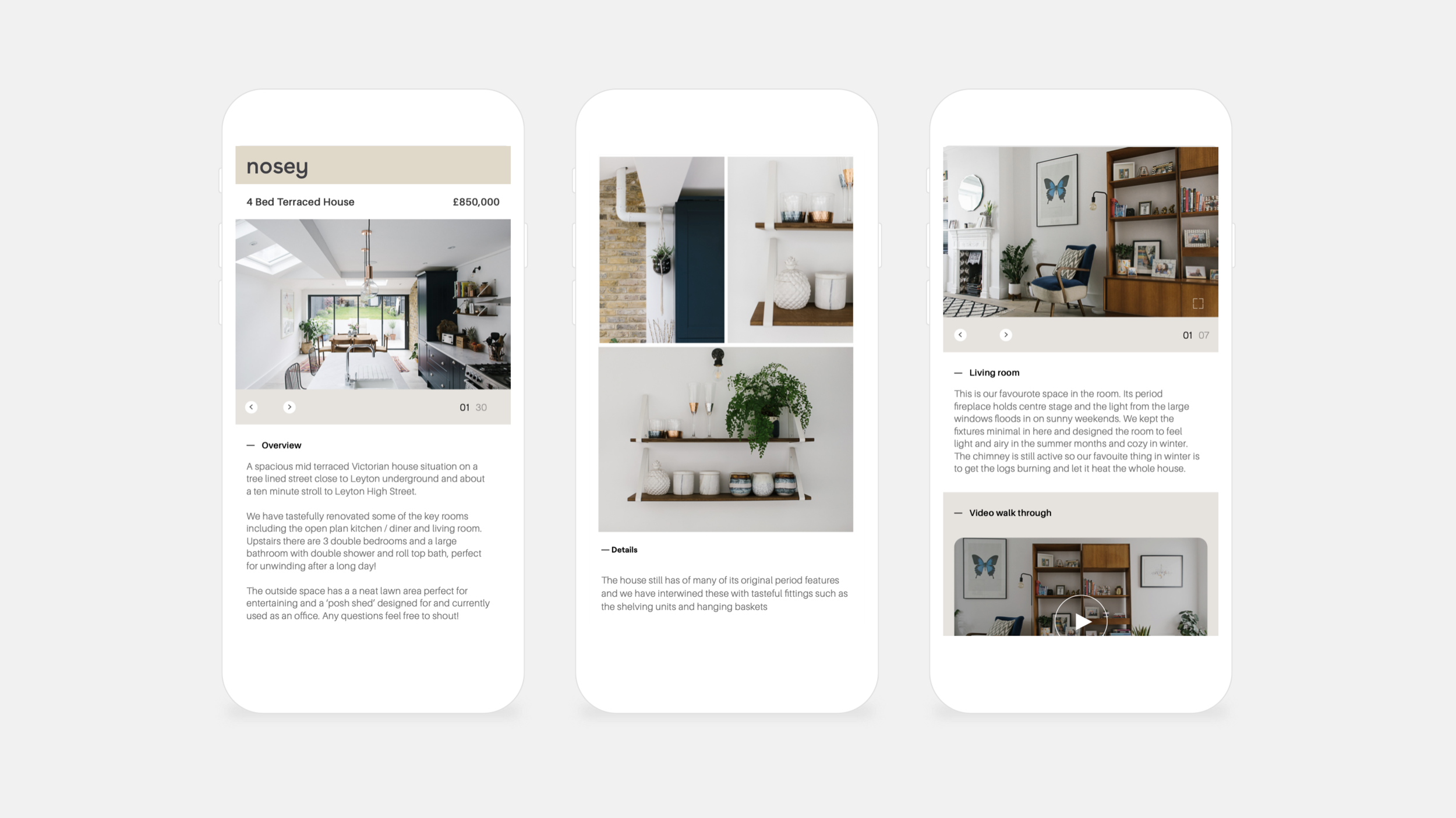
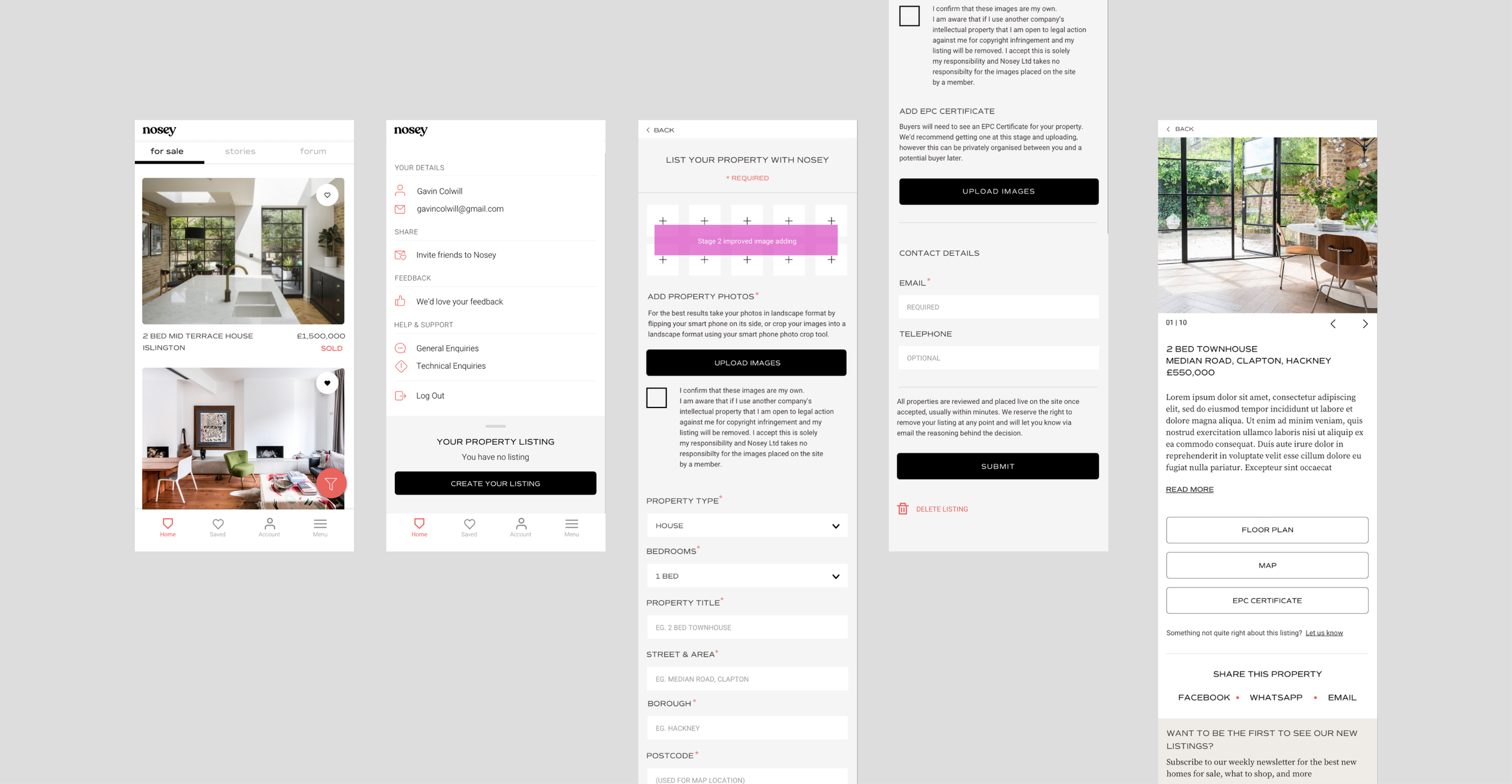
1. The ability to upload a property listing including images, videos and copy almost instantly to the app from their mobile phones or laptop.
2. The ability for the seller to edit / remove a listing / mark a listing as sold.
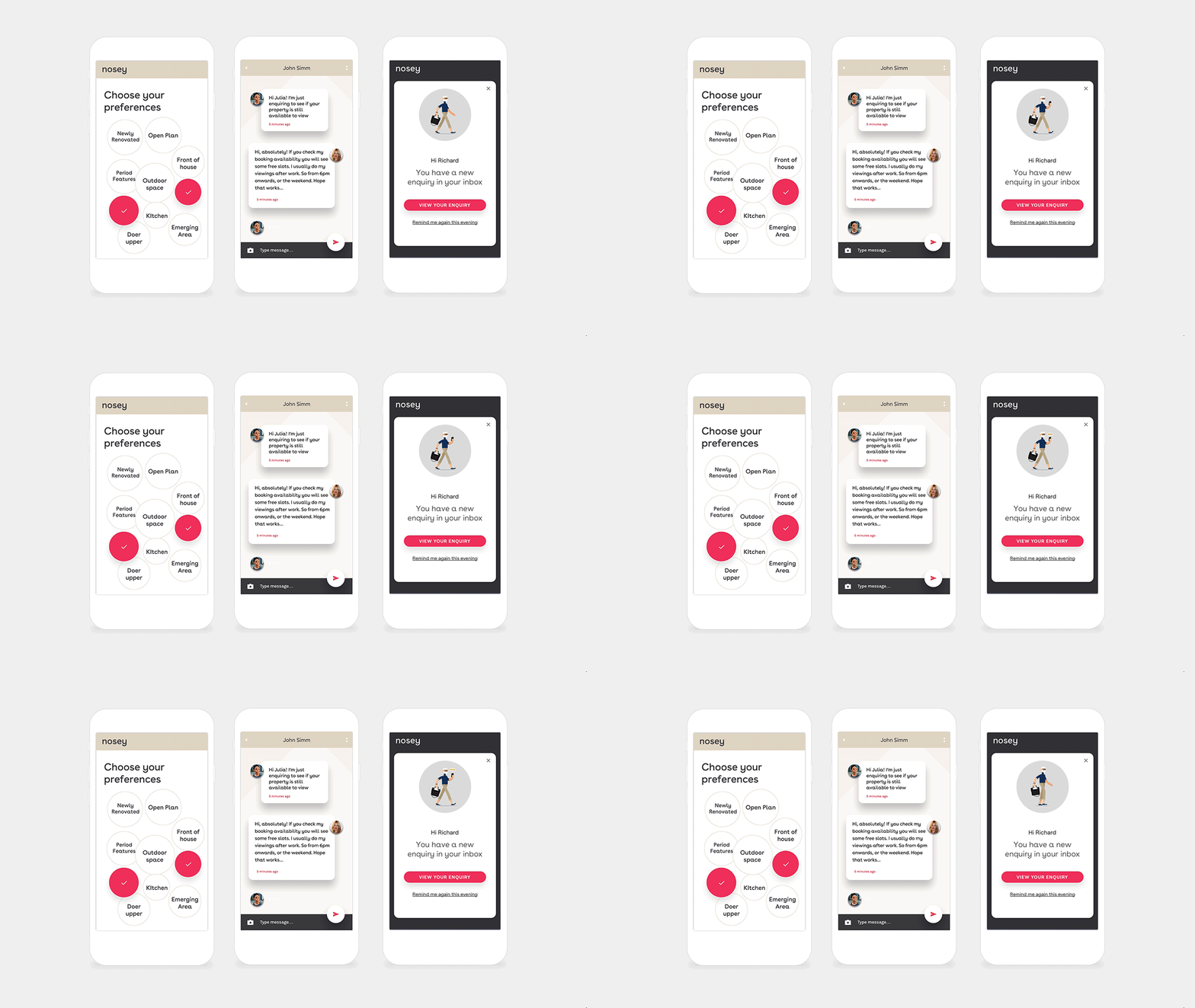
3. The ability for buyers to contact sellers directly.
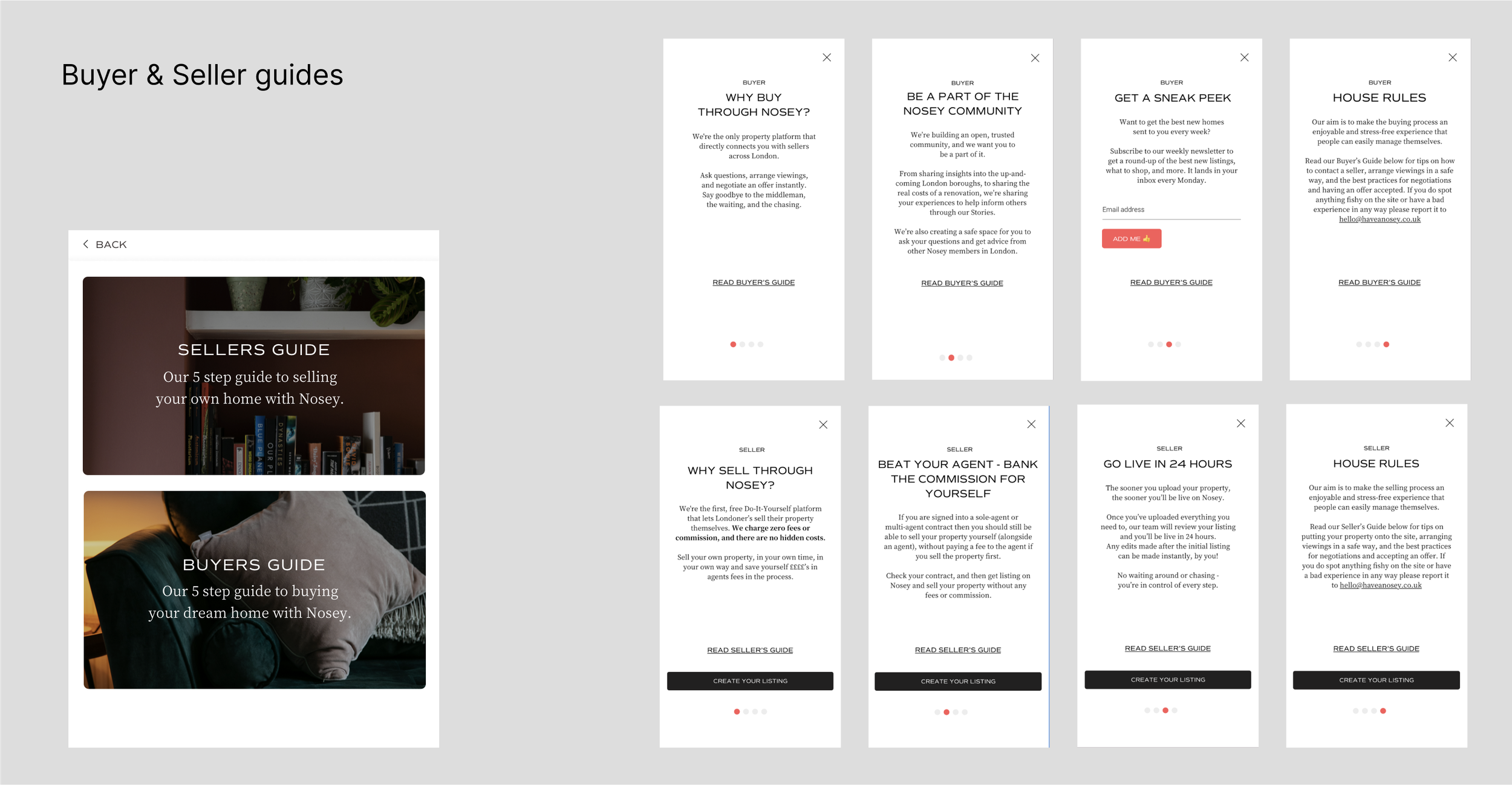
Onboarding with ‘Nosey parkers’
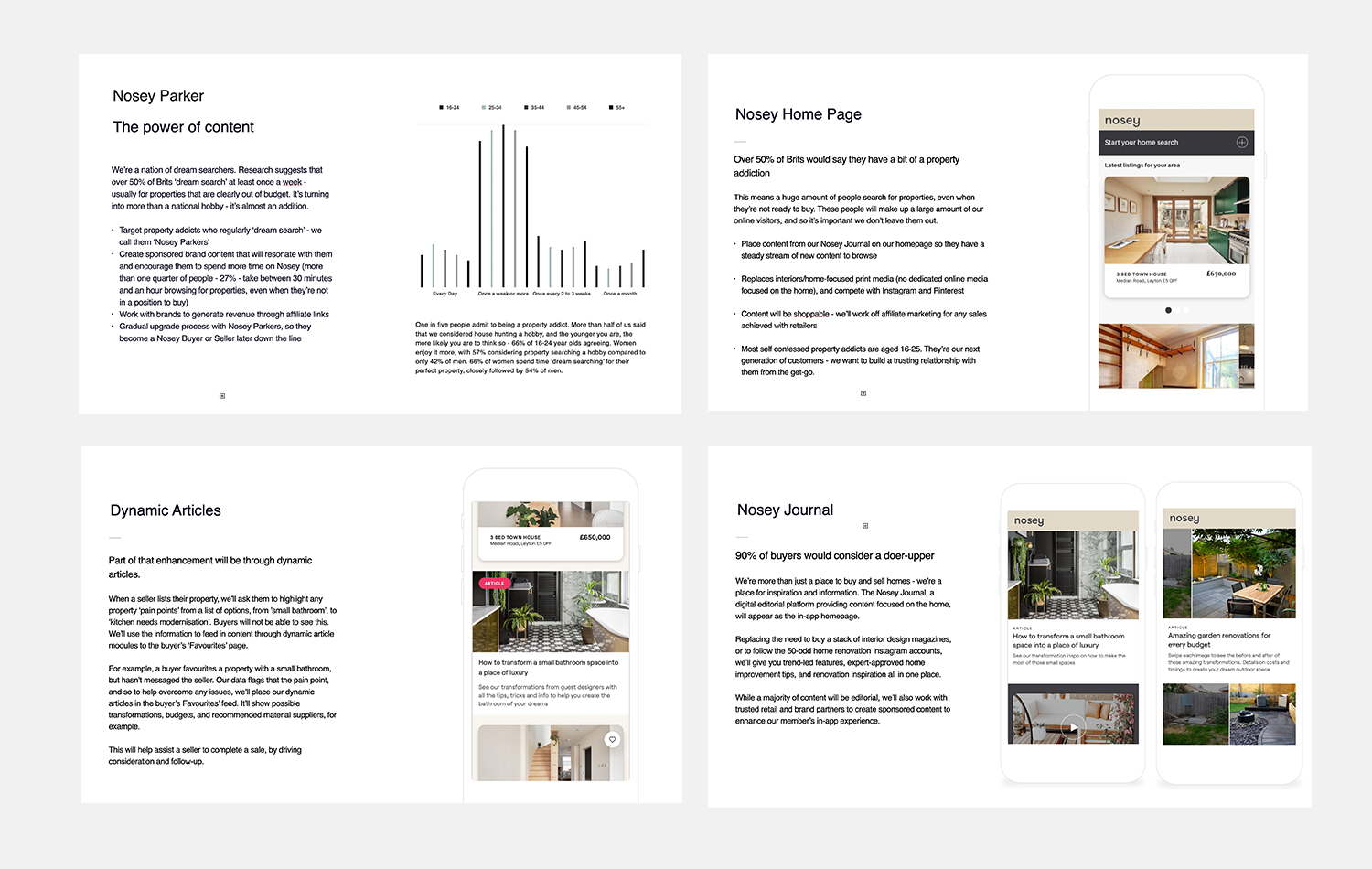
Recognising the importance of building trust as a precursor to users freely adding their properties to the site, we understood that an initial scarcity of properties for sale would hinder repeat visits. Our research unveiled the UK's deep-seated fascination with property, with over 60% of Brits actively engaging in dream searches for new homes weekly or seeking inspiration for home projects.
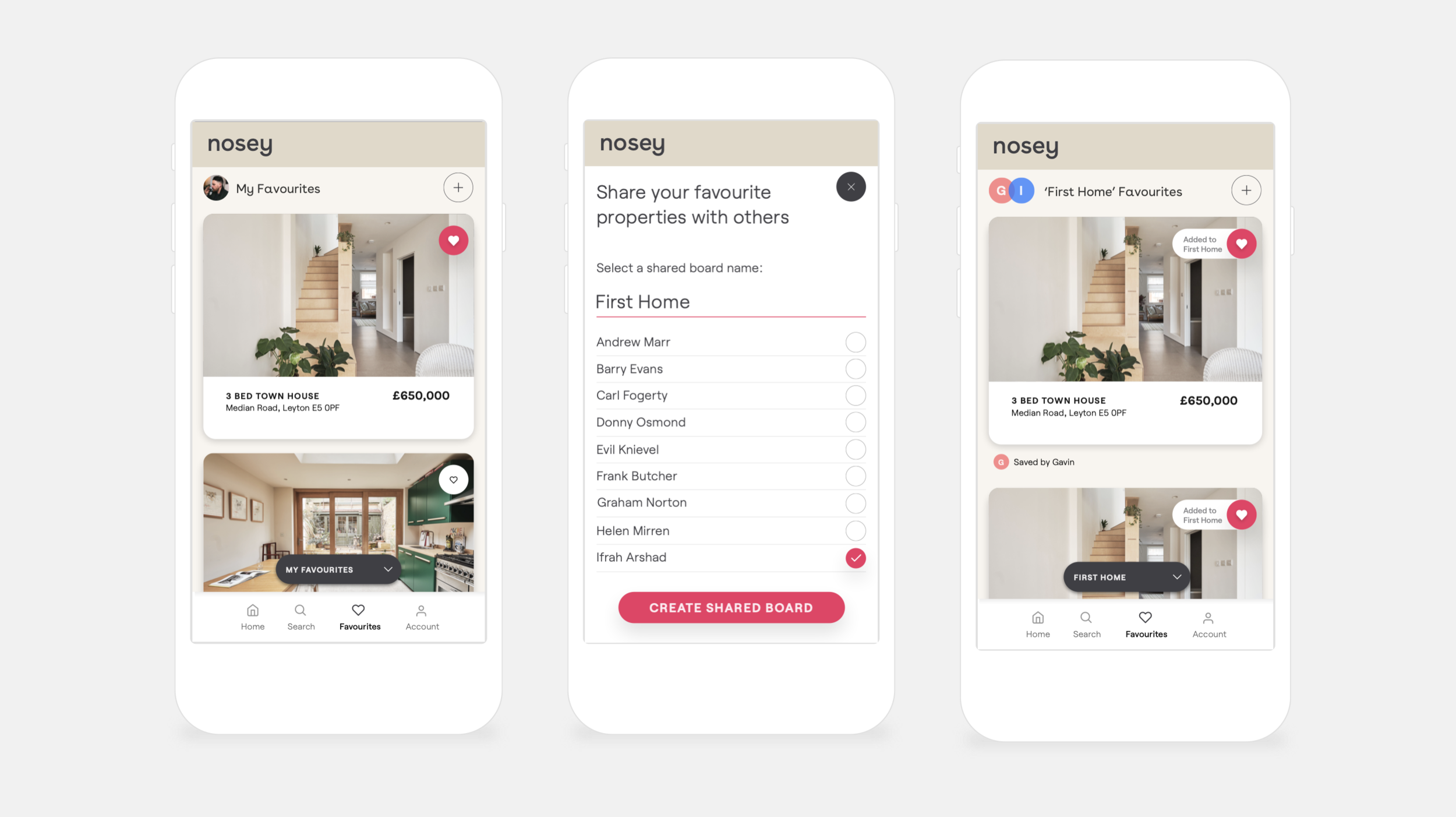
Armed with this knowledge, we strategically designed three core features for the site: 'Sell Your Home,' 'Get Inspired by Other Homes,' and a 'Forum' for property-related queries and community knowledge sharing. Our intention was to evaluate and test these features, gauging their effectiveness in encouraging repeat visits and fostering user engagement within the vibrant community we aimed to cultivate.
Hi-fidelity
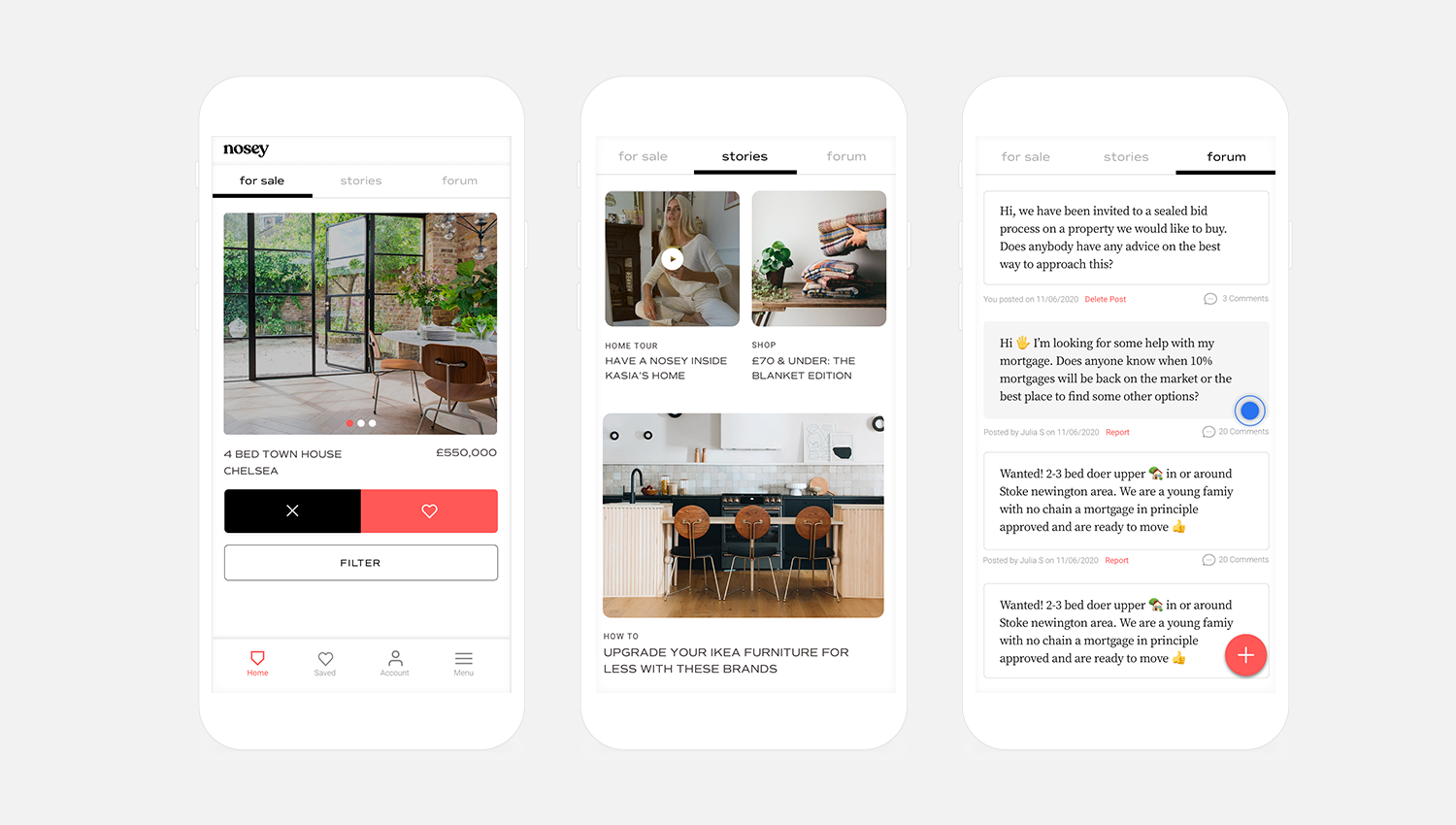
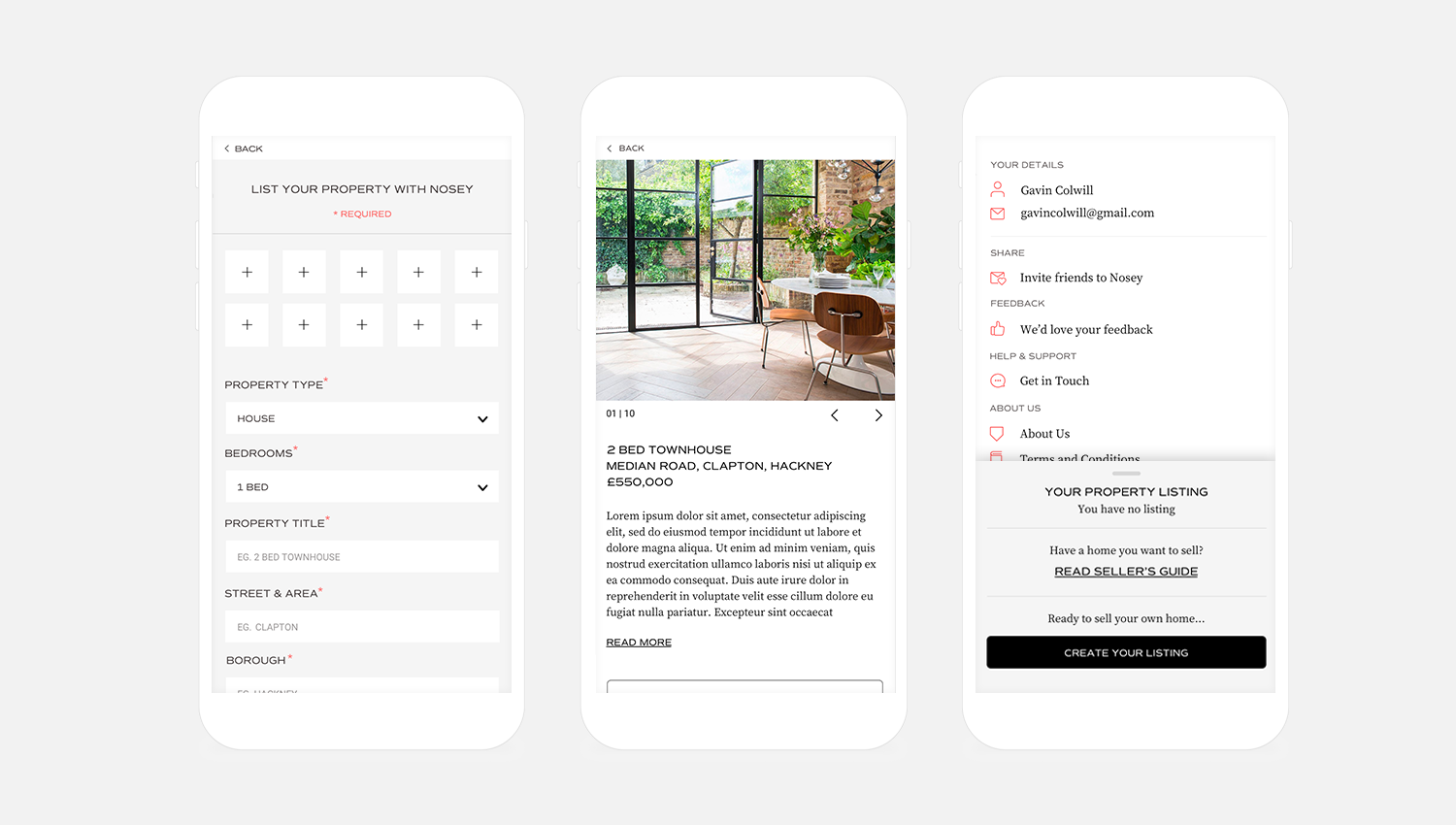
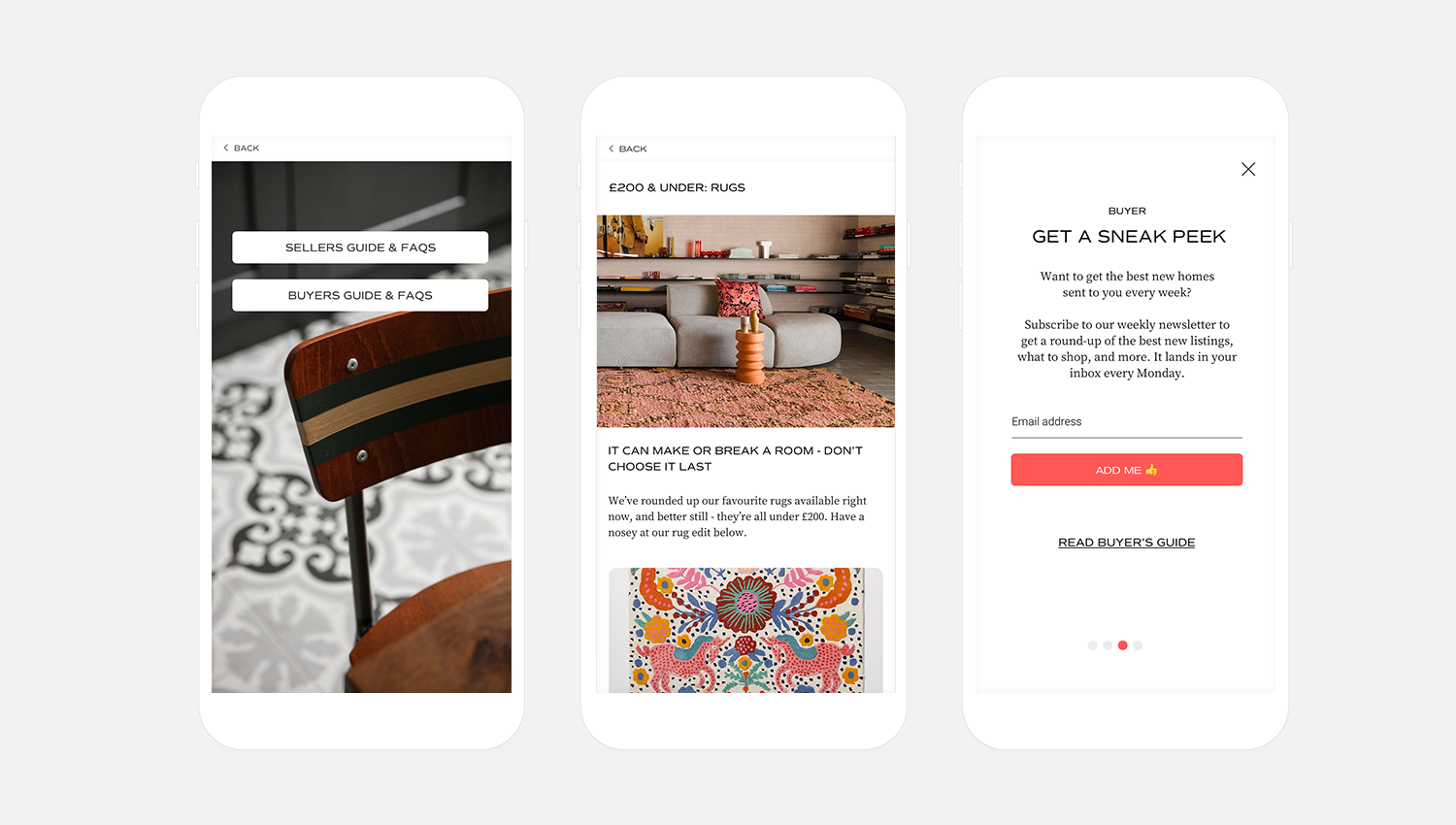
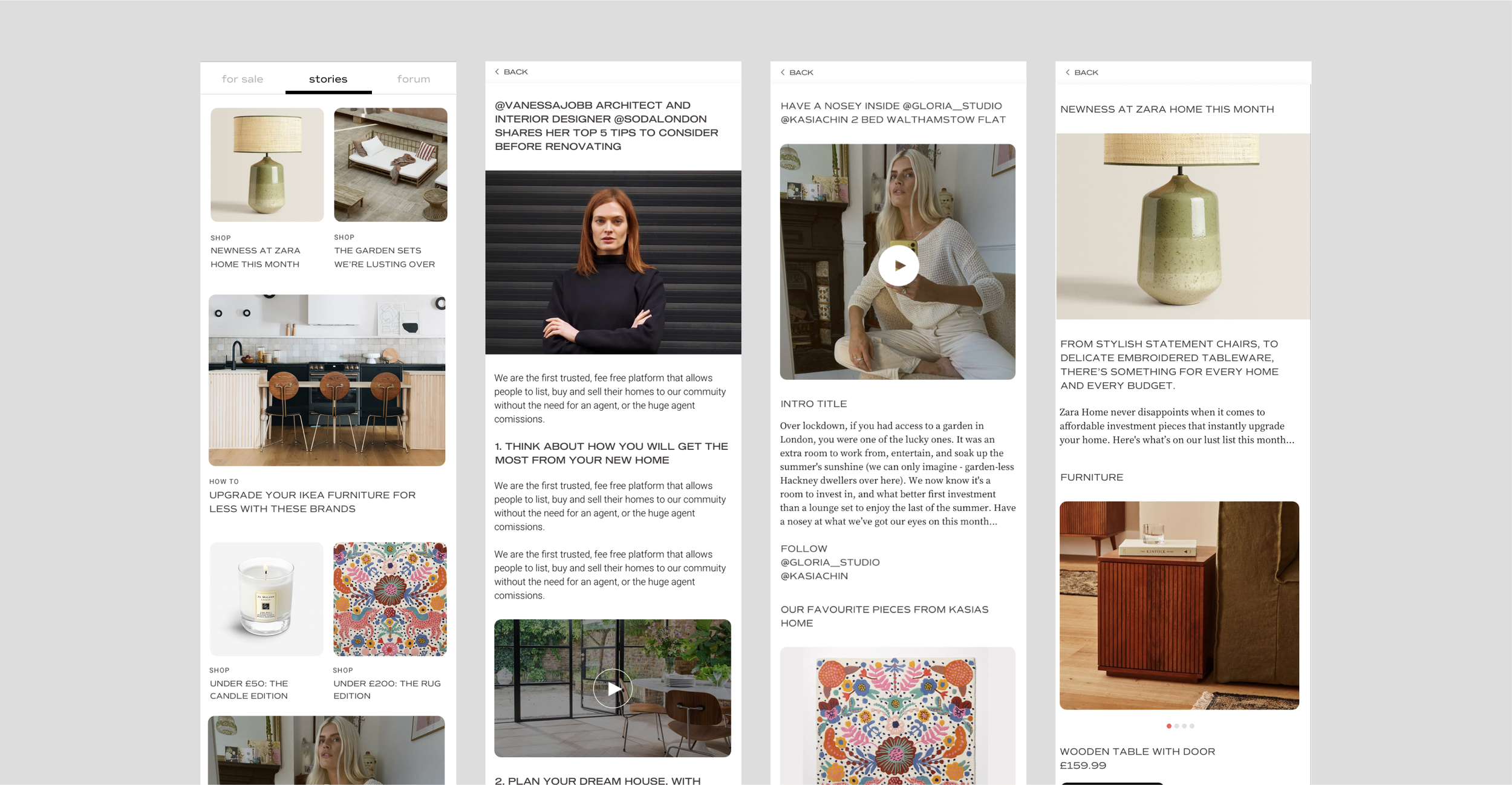
In response to feedback and analytical insights, we implemented strategic decisions to enhance user engagement. Notably, the "Shop the Collection" section of the site required attention as it was not functioning optimally. Despite generating significant interest through teaser content on Instagram, the conversion of those numbers to the web app was not as expected, indicating a bottleneck on social media platforms.
Exploring an alternative concept, we introduced a series featuring house tours across London. The inaugural tour showcased the residence of Instagram OG, Jim Chapman, and his partner Sarah Tarleton. The impact was immediate and extraordinary, with site metrics soaring. The story gained traction, however, the overwhelming surge in site visitors eventually, but thankfully only briefly, took the site down. It was clear this was the route forward to drive up followers and visitors to the platform.
Results and Impact:
The MVP validated the core concept clearly — sellers found the listing experience intuitive and fast, and both buyers and sellers responded positively to the peer-to-peer model. The platform attracted genuine property listings and a growing user base.
What the testing revealed was a community-first problem rather than a product problem: peer-to-peer selling requires a critical mass of buyers and sellers to function at its best. The house tour content — which briefly took the site down after a surge in traffic — pointed toward the right acquisition strategy: build the community through content, then reintroduce selling at scale.
The MVP achieved what it set out to do. It proved the concept, identified the growth lever, and gave us a clear roadmap for what comes next.