Client:
Amazon
Specialisms:
UX/UI, Design leadership, Art direction
Amazon Ask Alexa Learning platform
Amazon wanted to reach the individual retail staff selling their products on shop floors across the world — and equip them with the knowledge to recommend Amazon over competitors. We were commissioned to design and build a brand new responsive learning platform for Amazon's Alexa product family: Ask Alexa. I led the UX and product design from first concept through to launch — working across research, information architecture, interaction design, design system, and art direction. The platform launched across 5 EU markets and, based on its performance, was expanded into the US, Canada, Mexico, Australia, New Zealand, and Brazil.
Scale: Built to support 300,000 users with multilingual capability across device types.
Objectives
The brief centred on six core objectives:
Deliver a first class learning experience aligned with Amazon’s brand.
Build a network of members recommending Amazon products in store.
Develop the use of gamification to reward completion of courses.
Deliver up-to-date, easily accessible and bitesize learning content.
Allow members to train on their phone while at work or on the go.
Be scalable for up to 300,000 users with multi-lingual support.
User Research
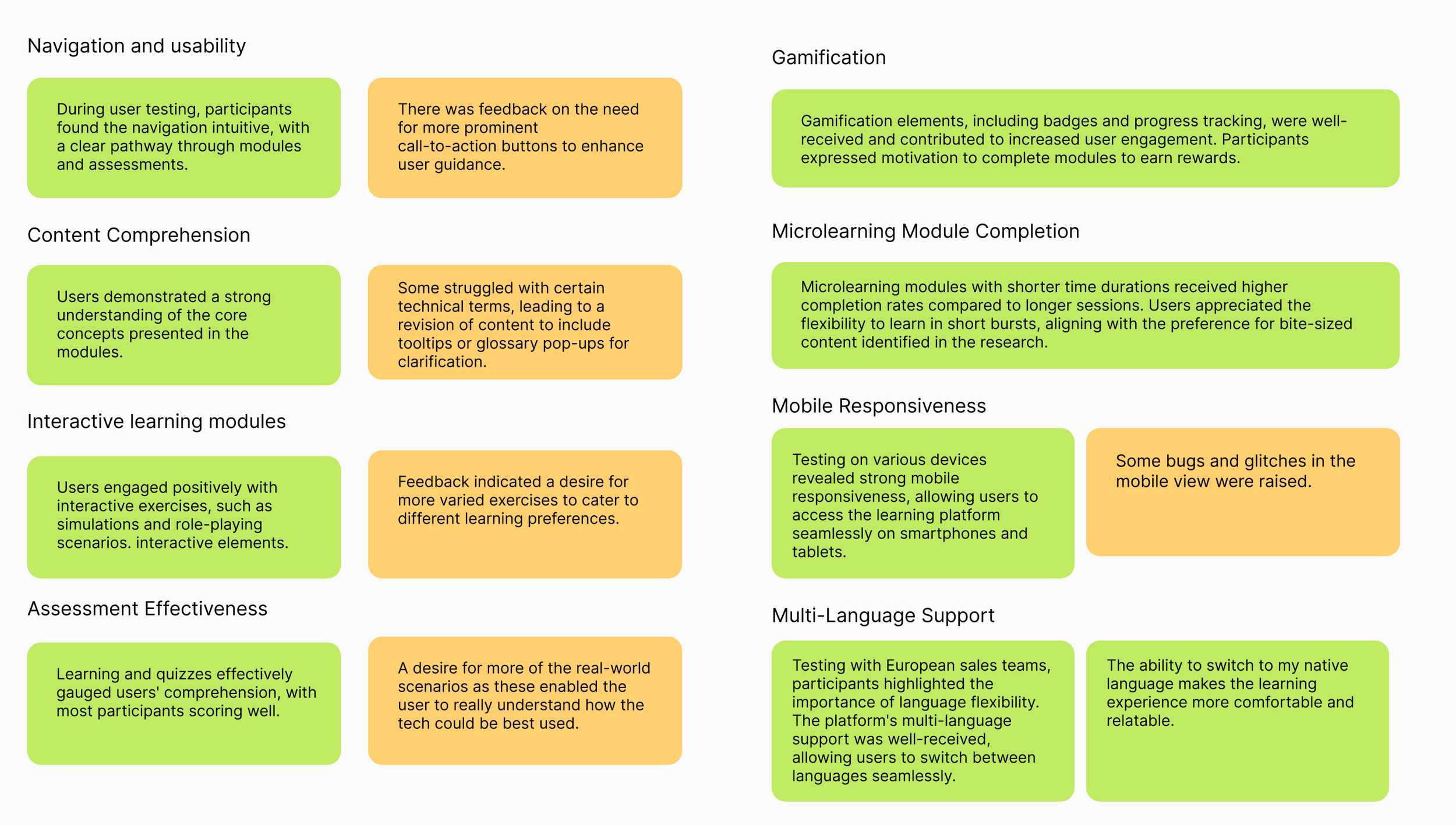
User Interviews, surveys and observational studies were conducted by our research team.
These involved one-on-one interviews with sales associates & managers across Amazon
and Amazons partners.
Common pain points were identified, such as a lack of time to learn about the products, a lack of technical understanding among sales associates which led to uncertainty in the sales funnel.
Distributed surveys to collect quantitative data on current knowledge levels and training preferences led to results that a high percentage of respondents expressed a need for more interactive learning materials and highlighted a desire for regular assessments to track progress.
Observational Studies of the sales teams interactions and customer engagements uncovered a consistent challenge in articulating the technical features of the Alexa products, leading to potential customer disengagement and lost sales.
Persona development
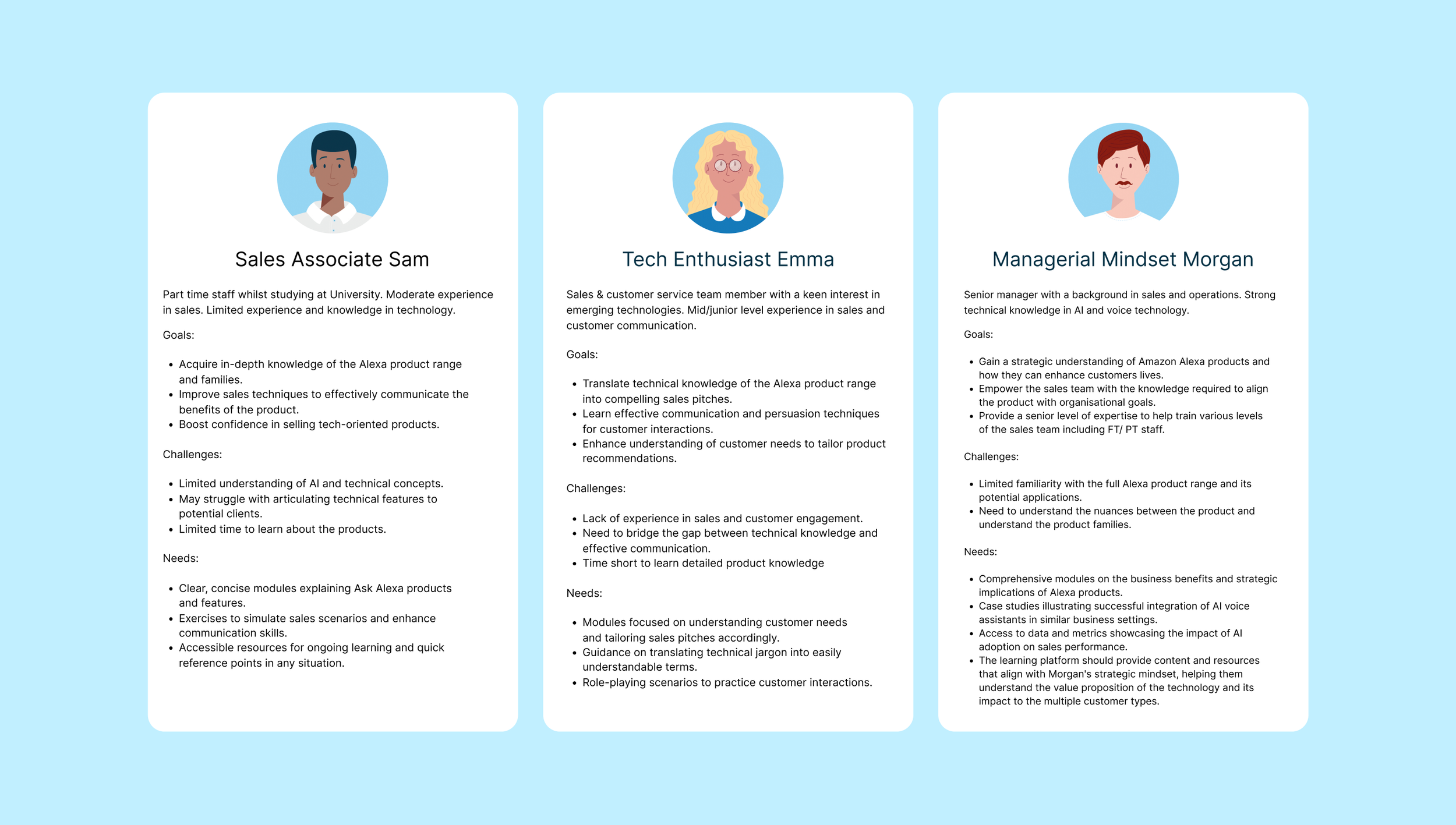
The personas played a crucial role in shaping and guiding the design process for the learning platform. Here's how each persona contributed to specific design considerations:
Sam - Part Time Sales
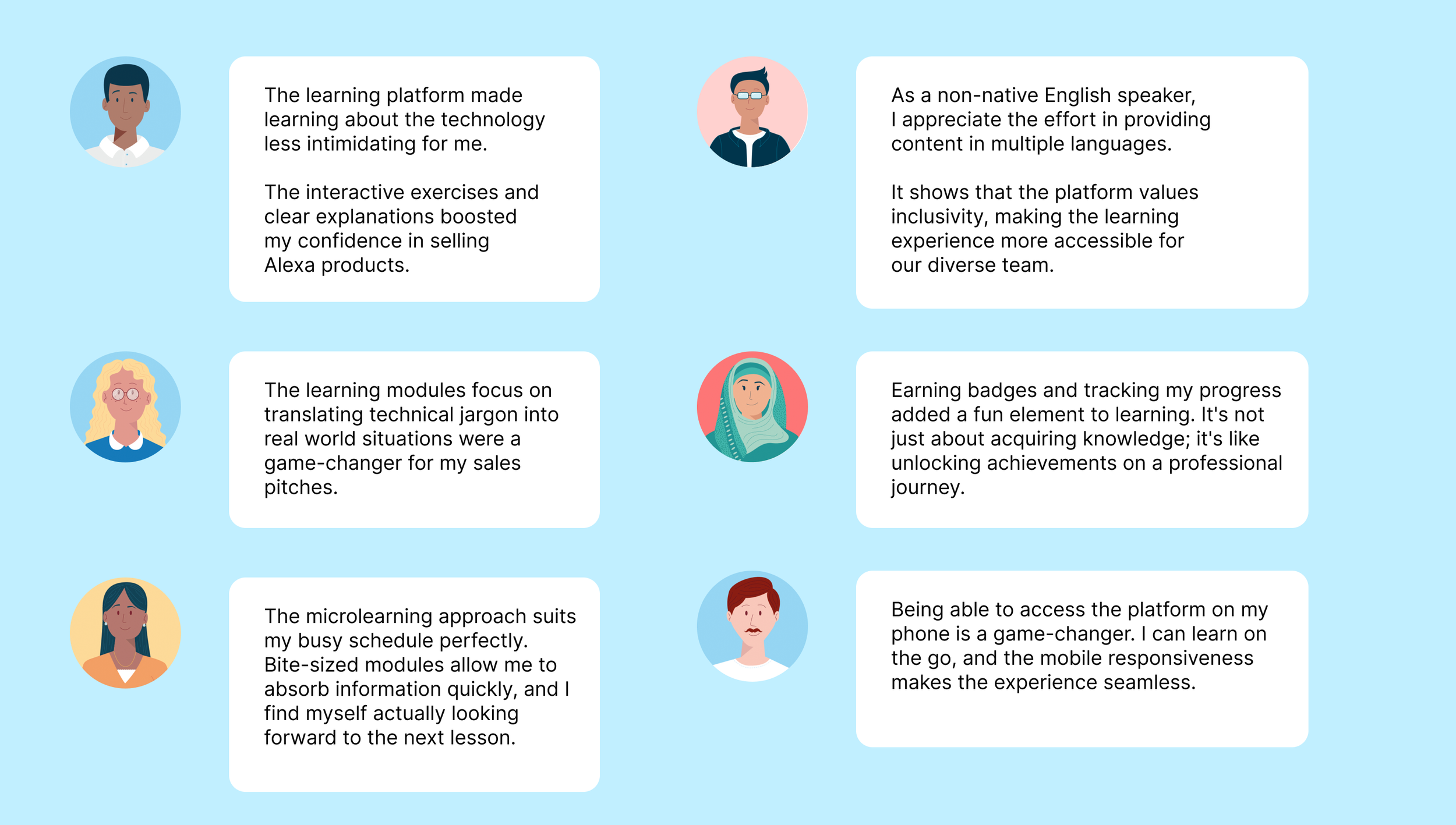
Sam's limited technical background highlighted the importance of creating user-friendly and accessible content. The design process incorporated clear and straightforward language, avoiding unnecessary technical jargon. Interactive elements, such as simulations and practical exercises, were integrated to enhance Sam's learning experience.
Emma - Tech Enthusiast
Emma's need to bridge the gap between technical knowledge and effective communication influenced the inclusion of modules focused on translating complex concepts into layman's terms. The design incorporated visuals, case studies, and scenarios that helped Emma practice communicating technical information in a more user-friendly manner.
Morgan - Managerial role
Morgan's strategic perspective guided the inclusion of modules focused on the Alexa families and where each product sits within that family. The design process aimed to provide Morgan with insights into how the Alexa product ranges aligned with customer needs both at home and in the workplace, incorporating strategic integration of both customer types within the sales process.
Overall Impact of Personas
Personalisation:
The design process acknowledged the diverse learning needs of different personas, leading to a personalised learning experience. Tailored content, scenarios, and assessments were developed to address the unique challenges and goals of each persona.
Gamification Integration:
Considering Sam's need for confidence building, Emma's desire for engaging content, and Morgan's interest in strategic alignment, gamification elements were strategically integrated. This included badges, challenges, and progress rewards to motivate and engage learners throughout the upskilling journey.
Micro-learning Implementation:
In response to the preference for shorter learning sessions identified in both the personas and the micro learning research, the design incorporated bite-sized modules, allowing staff to fit learning into their busy schedules. The platform will be accessible on various devices to enhance accessibility and accommodate varying time constraints..
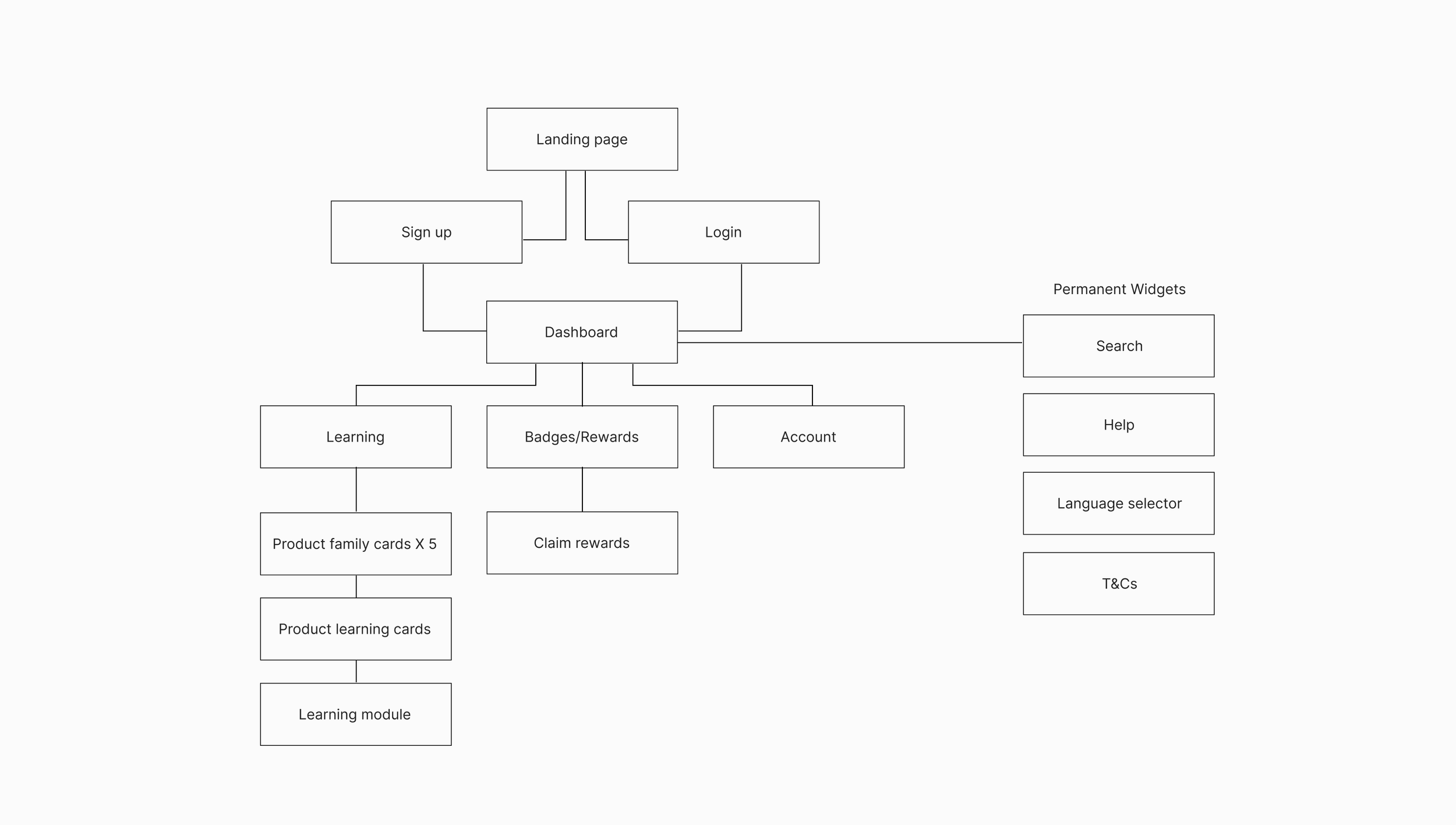
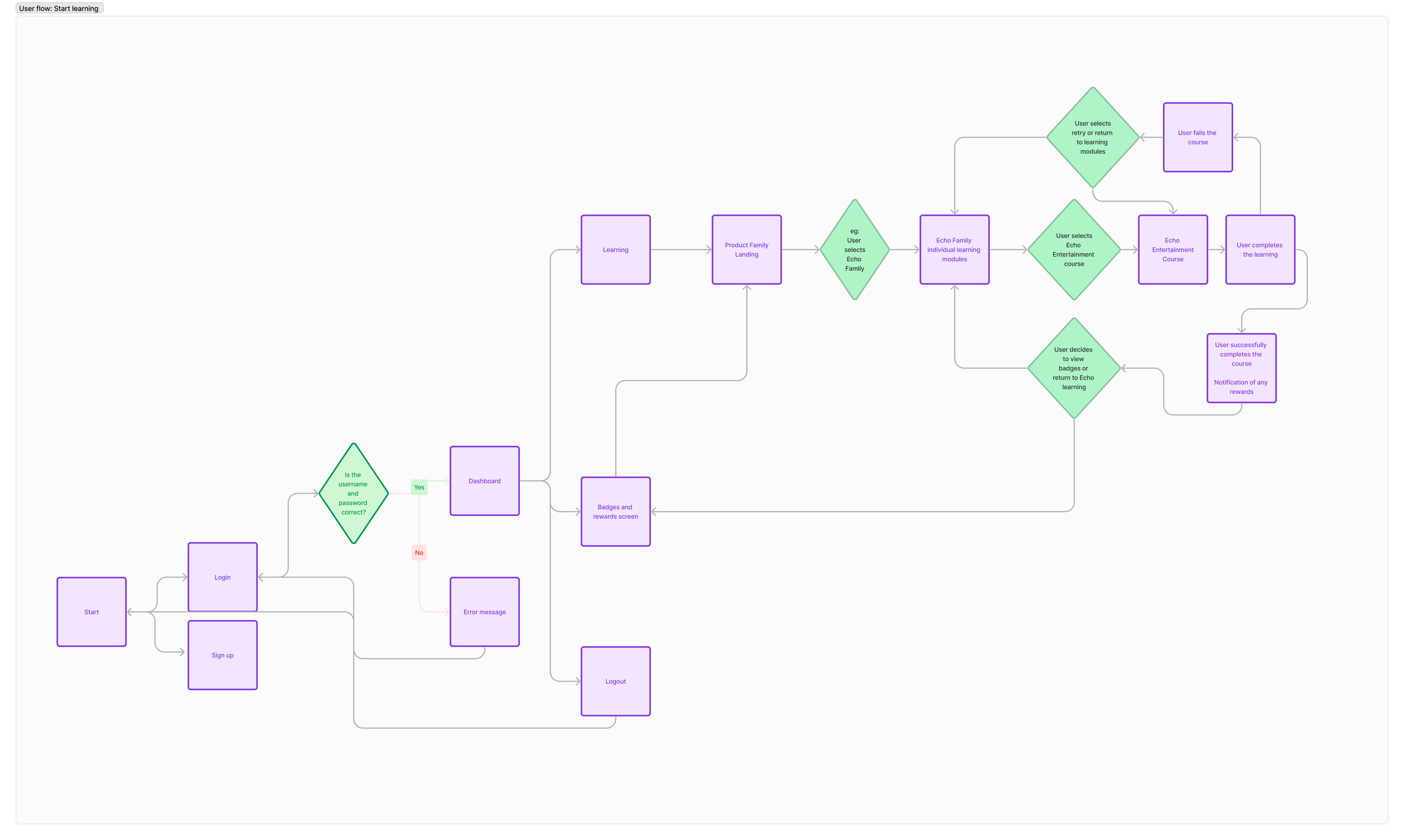
Information Architecture: + User flow Golden path
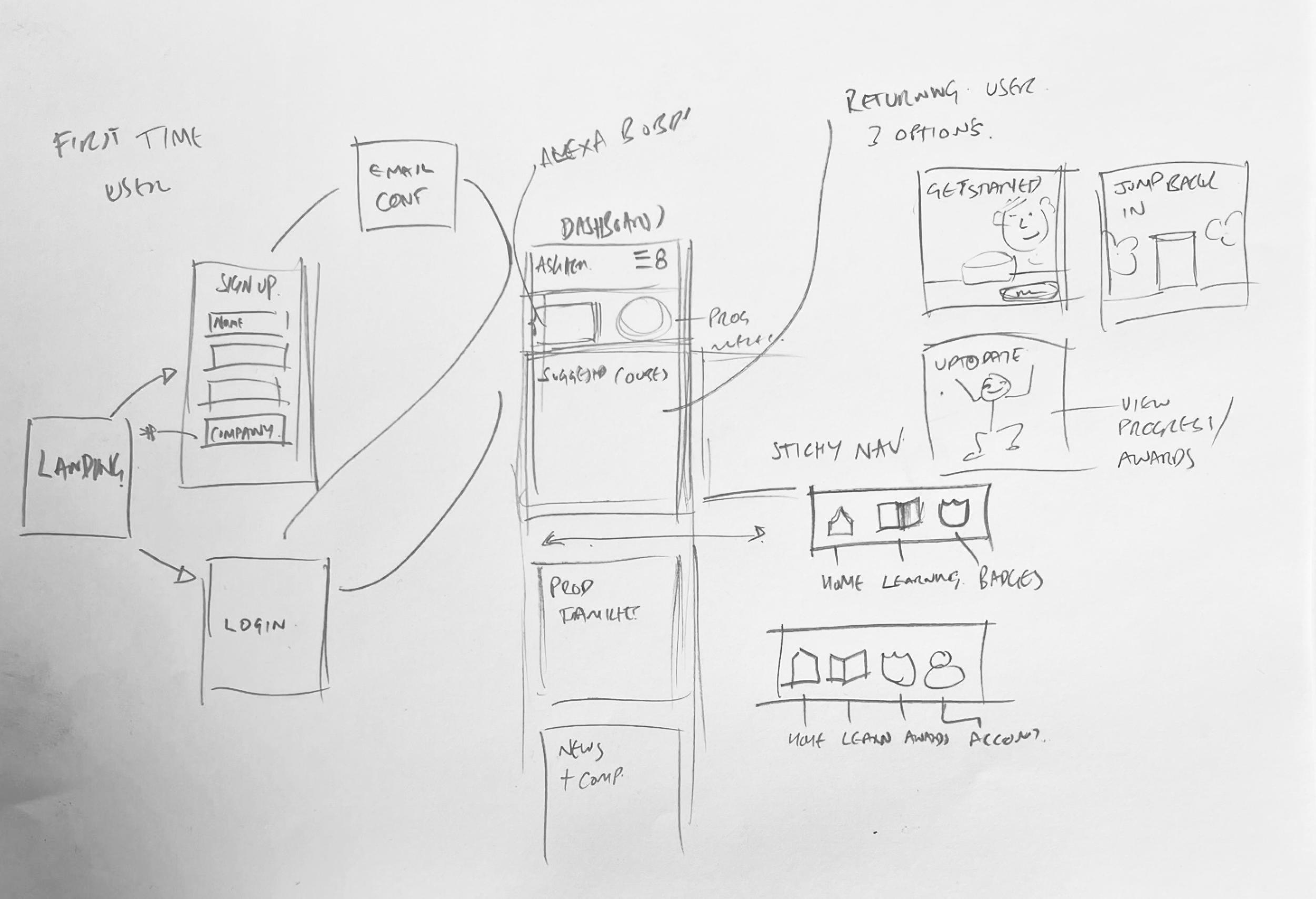
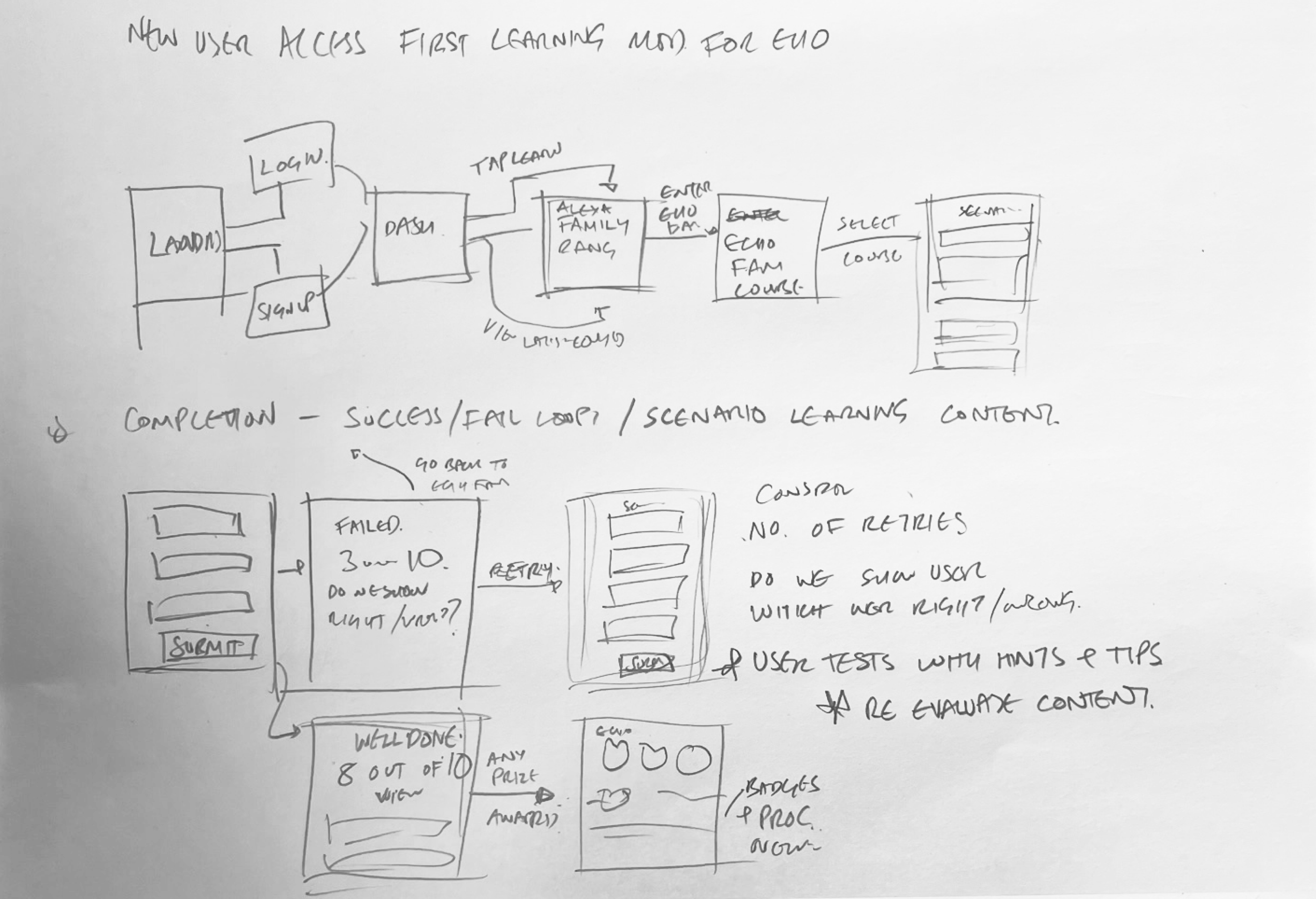
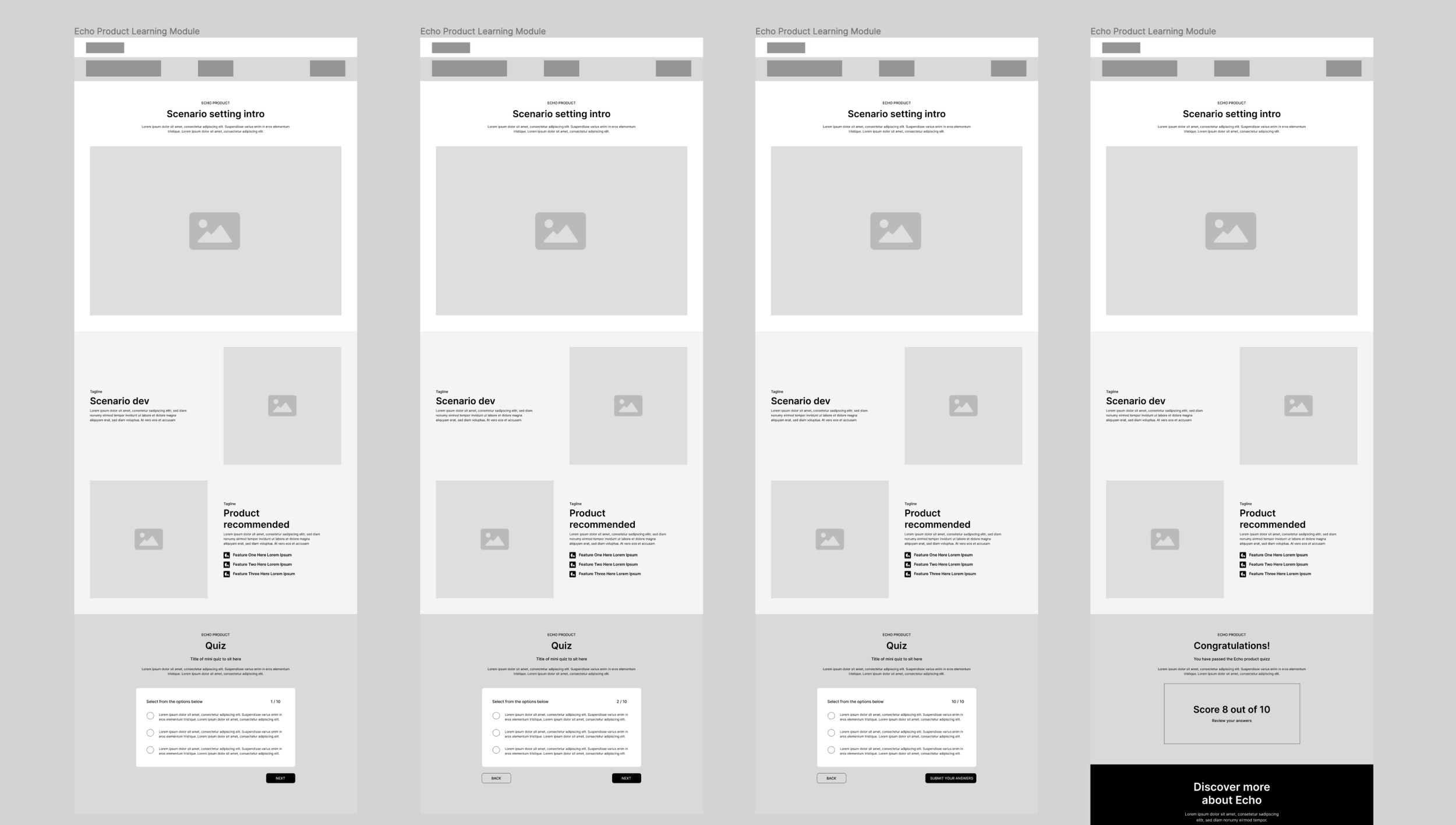
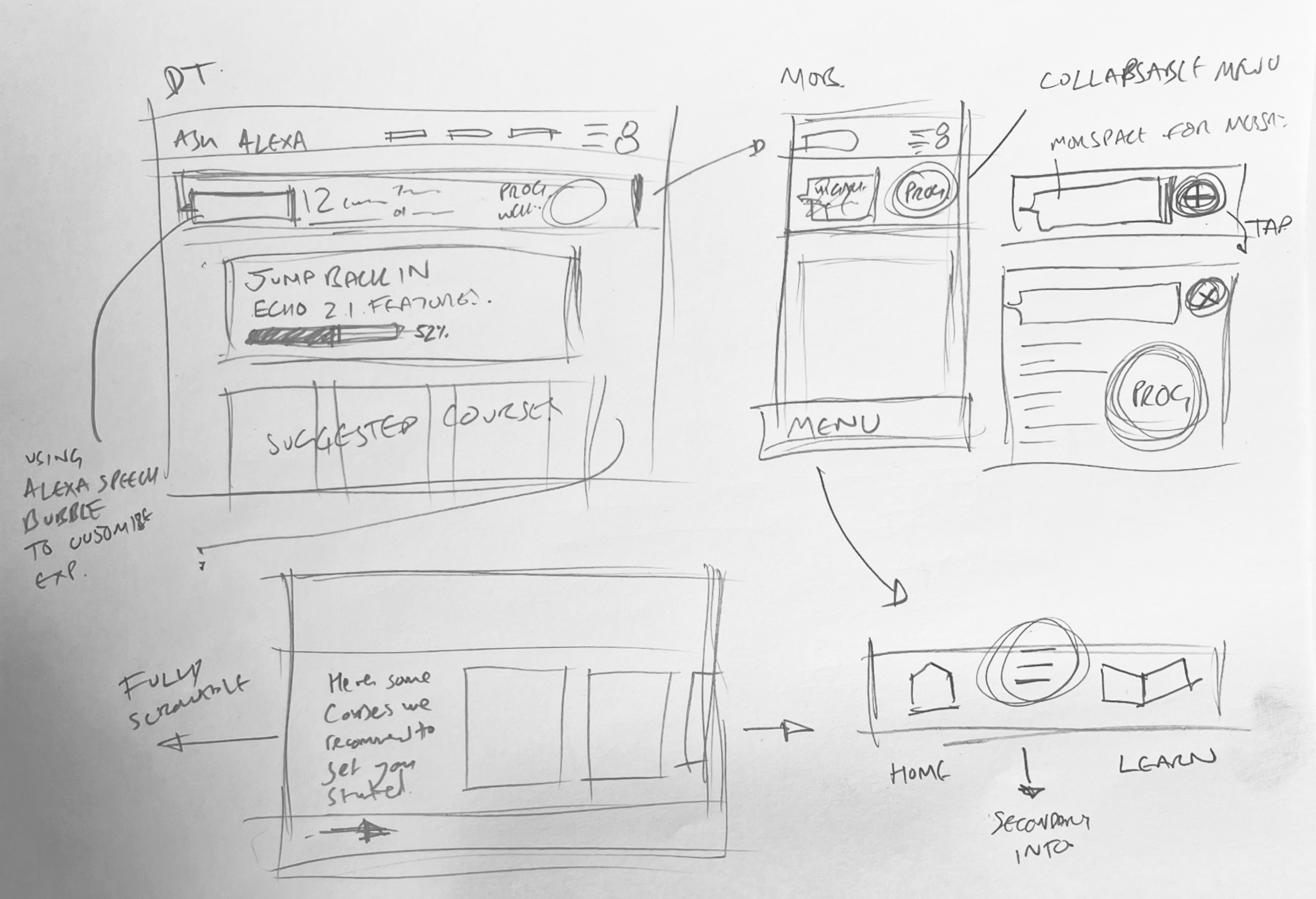
Sketches, wireframes & prototyping
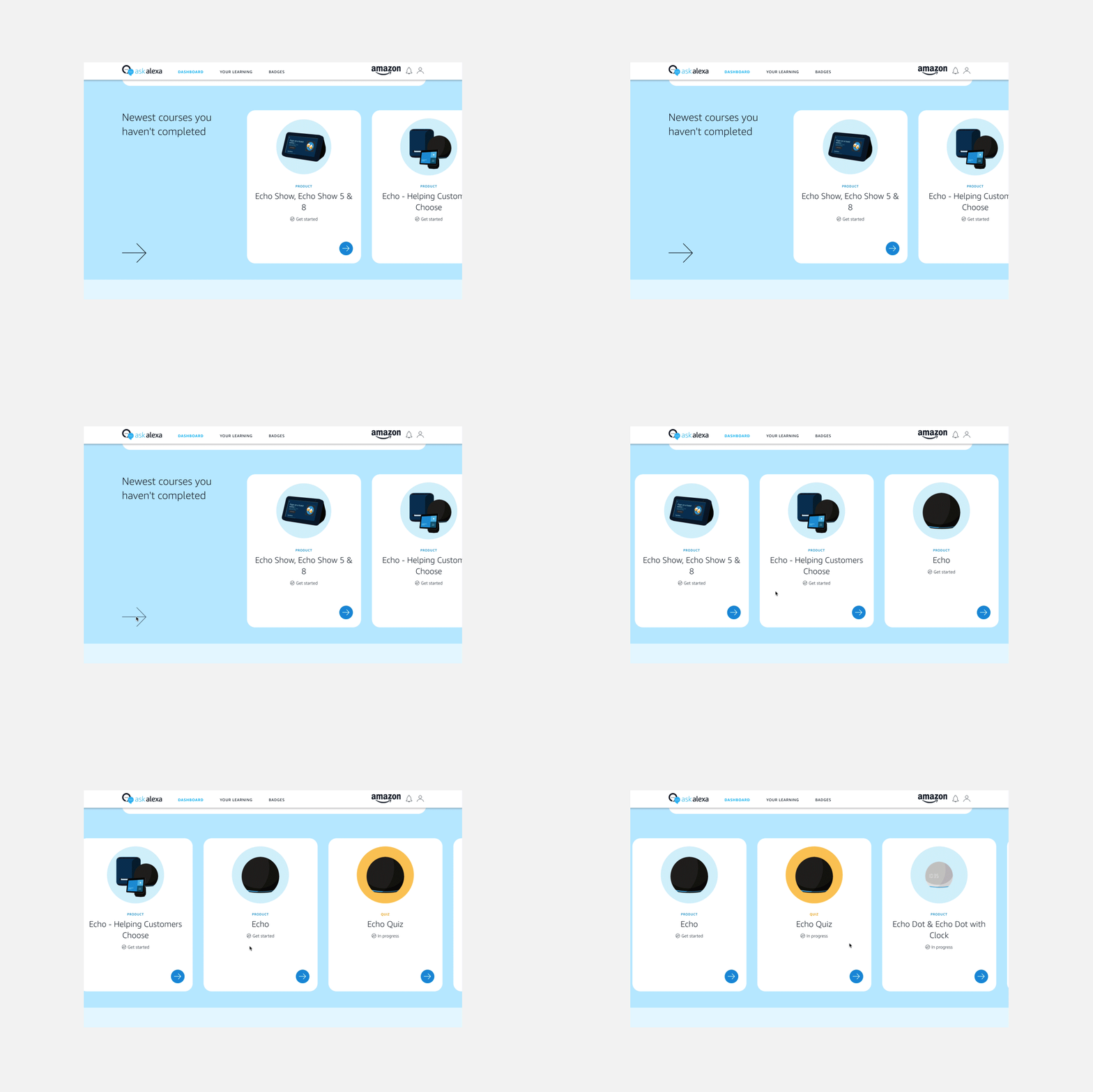
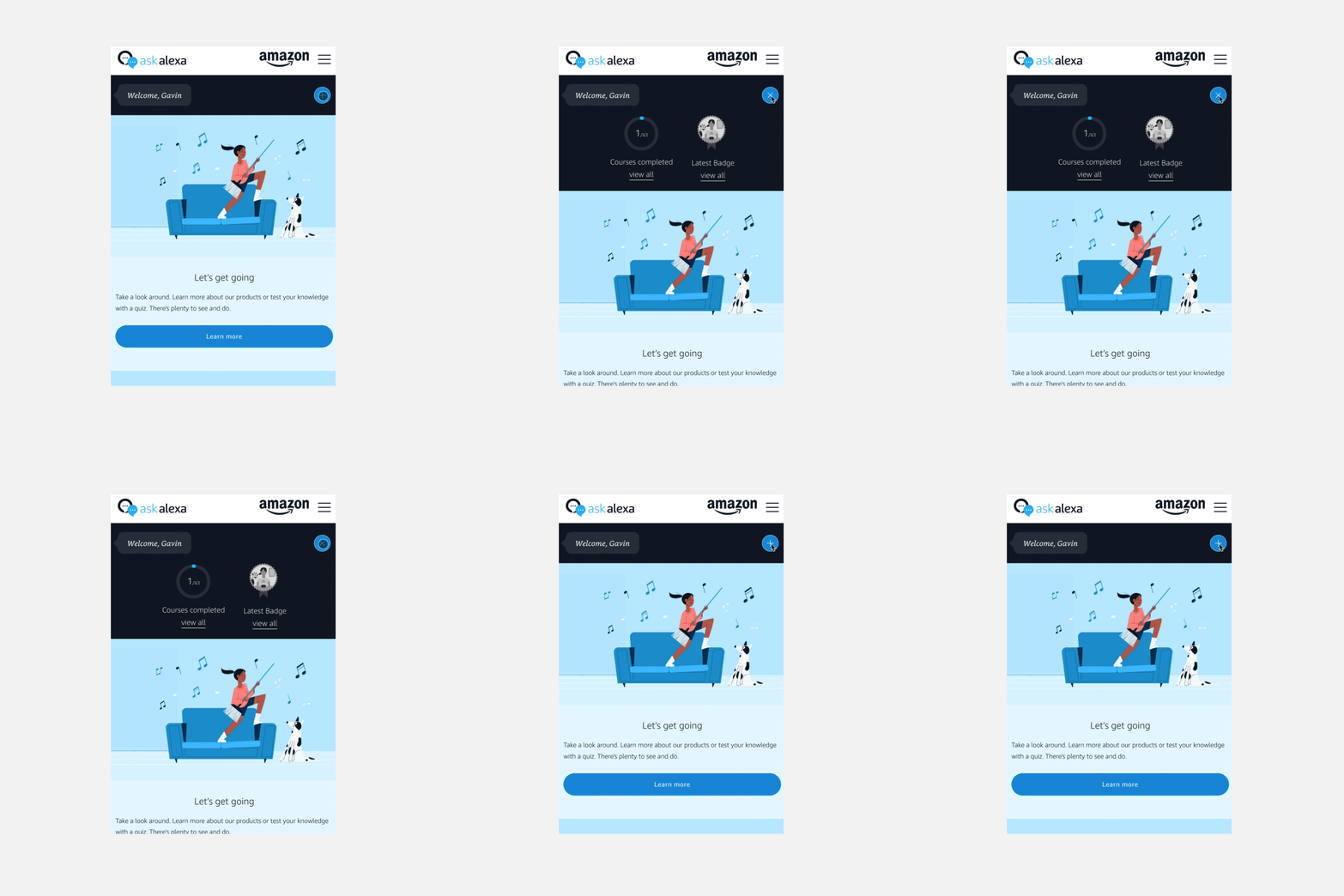
Micro animations
Design System & Hi Fidelity
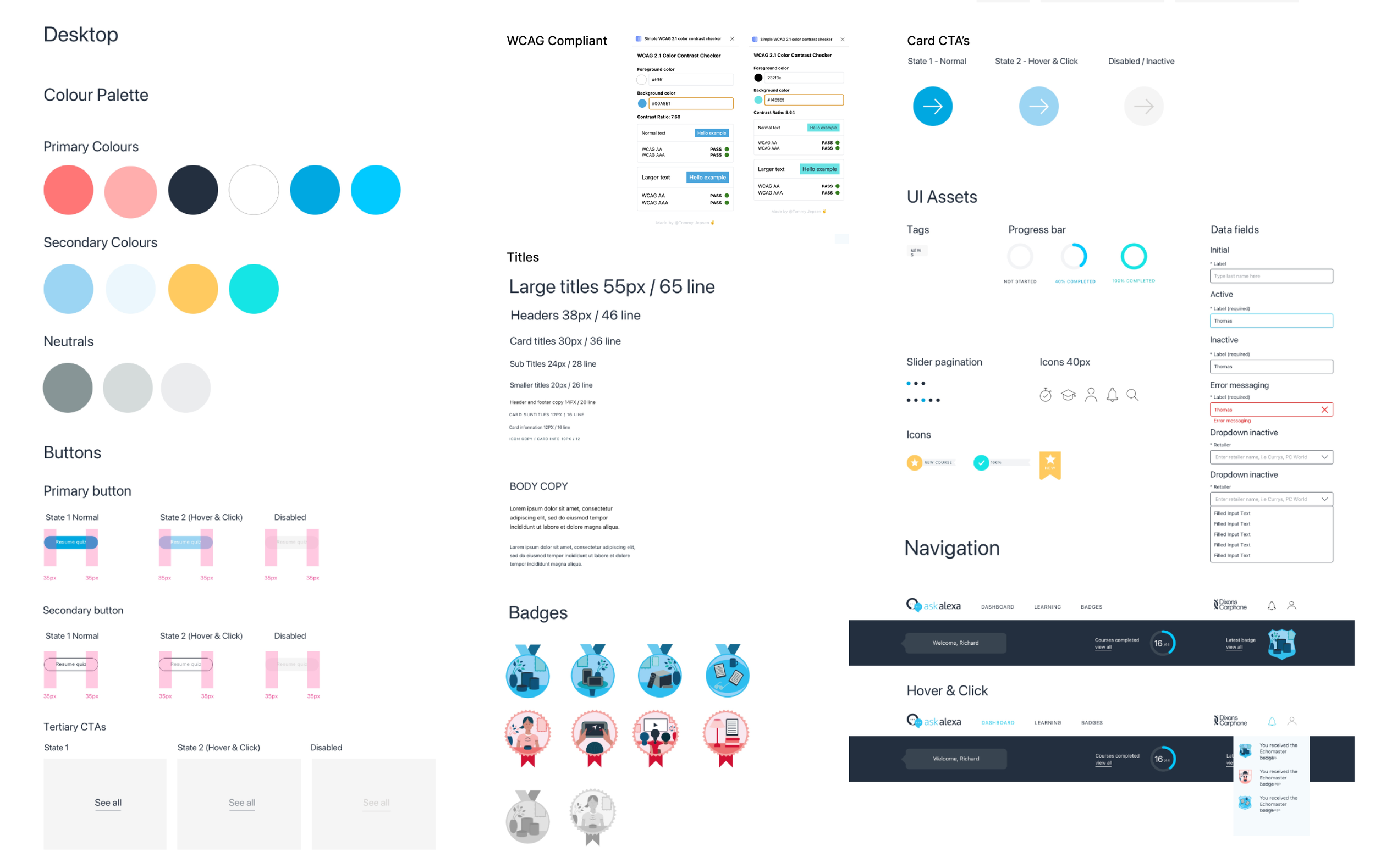
Design system first iteration
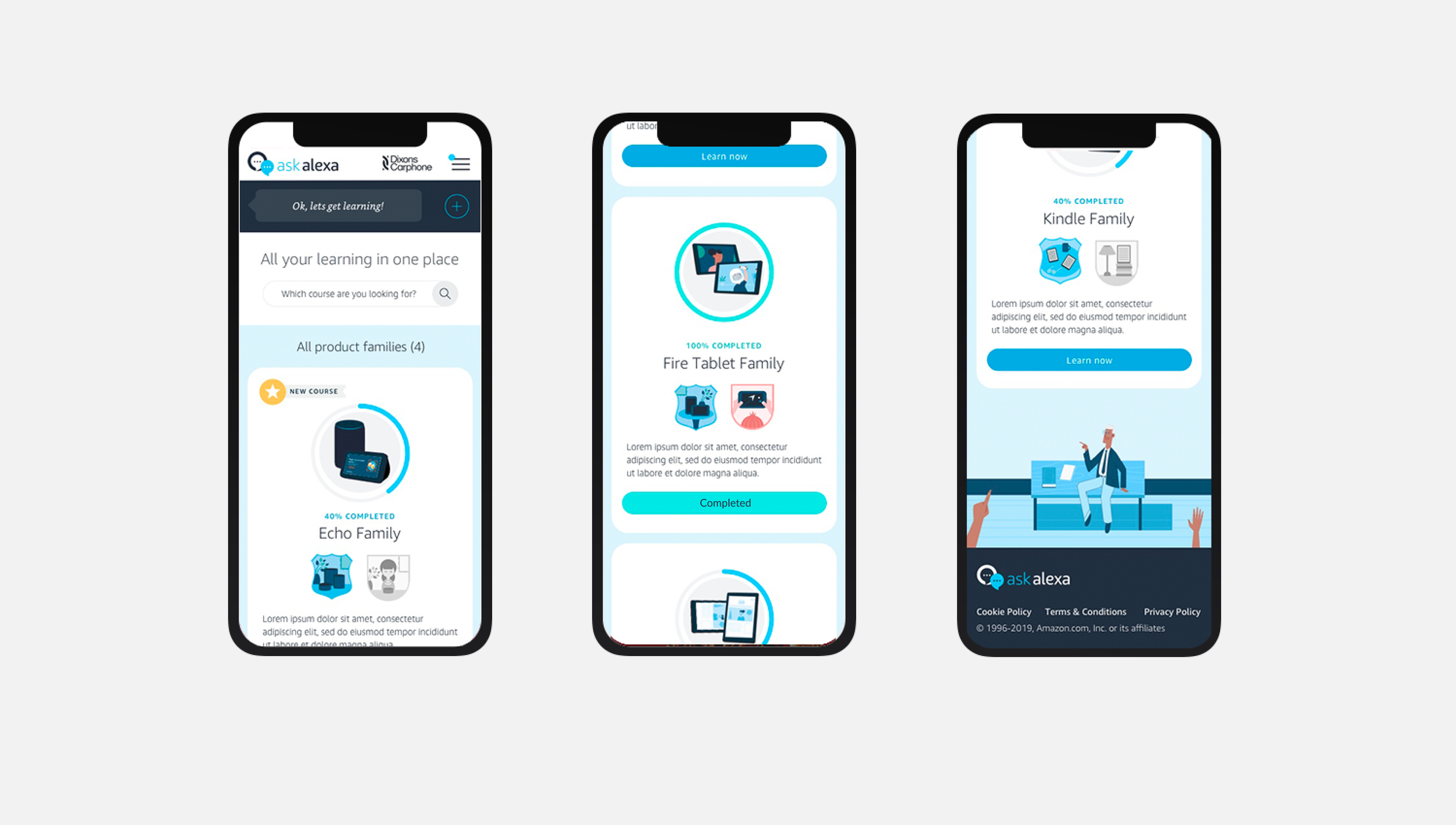
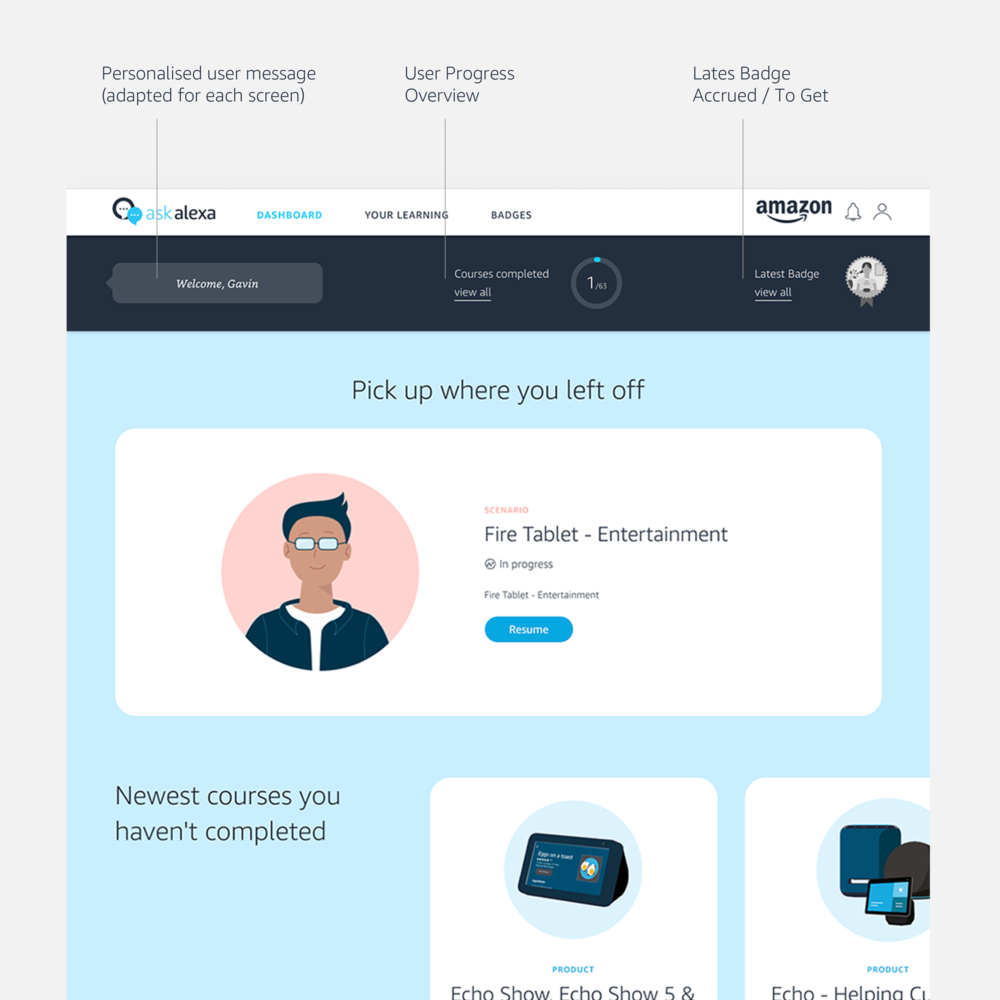
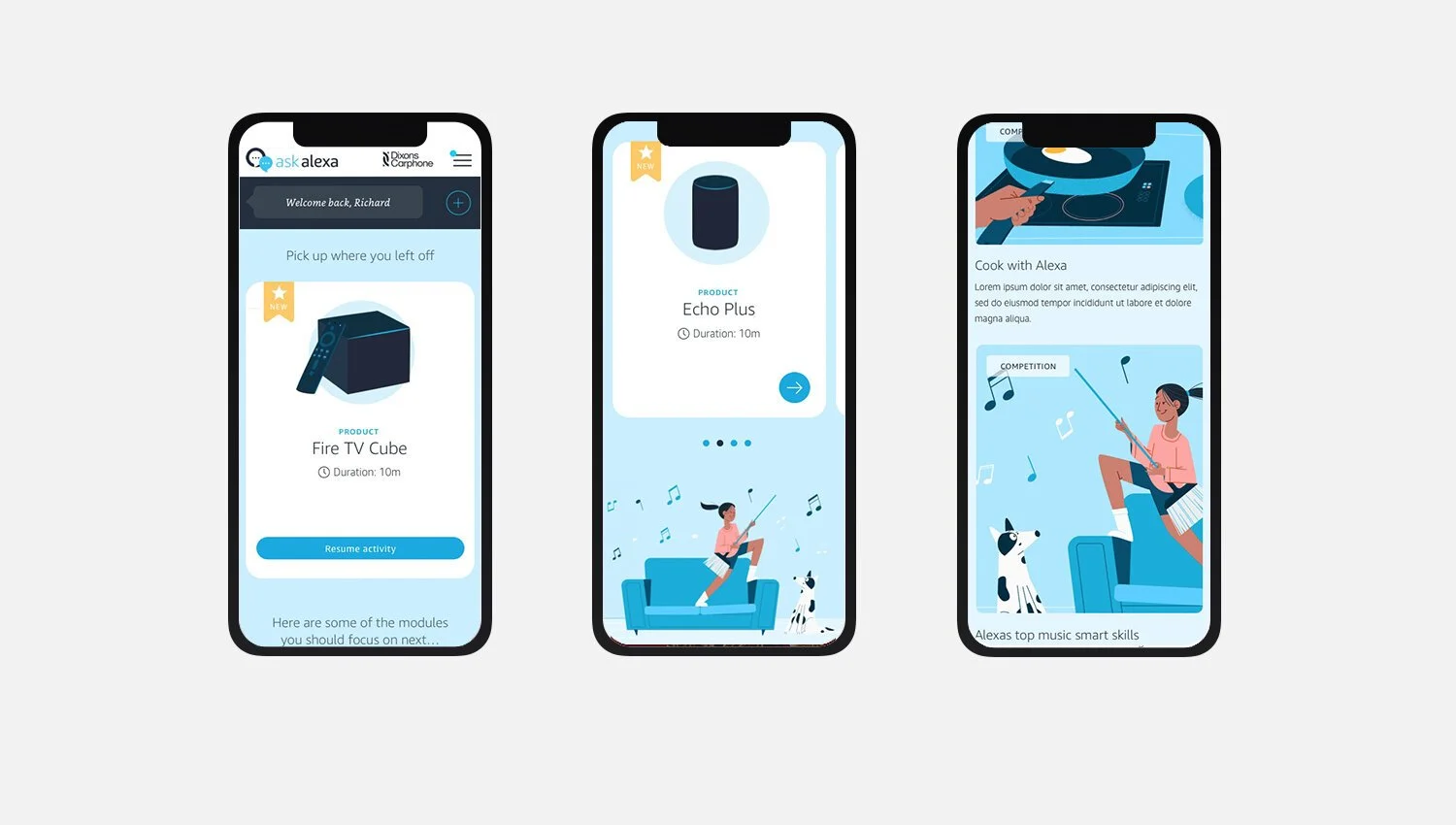
Below are hi-fidelity screens for the MVP launch. I created a basic style guide that included a UI colour palette, responsive type scale and the framework to Totara framework with the foundations in place to scale into an atomic design system as the product grew.
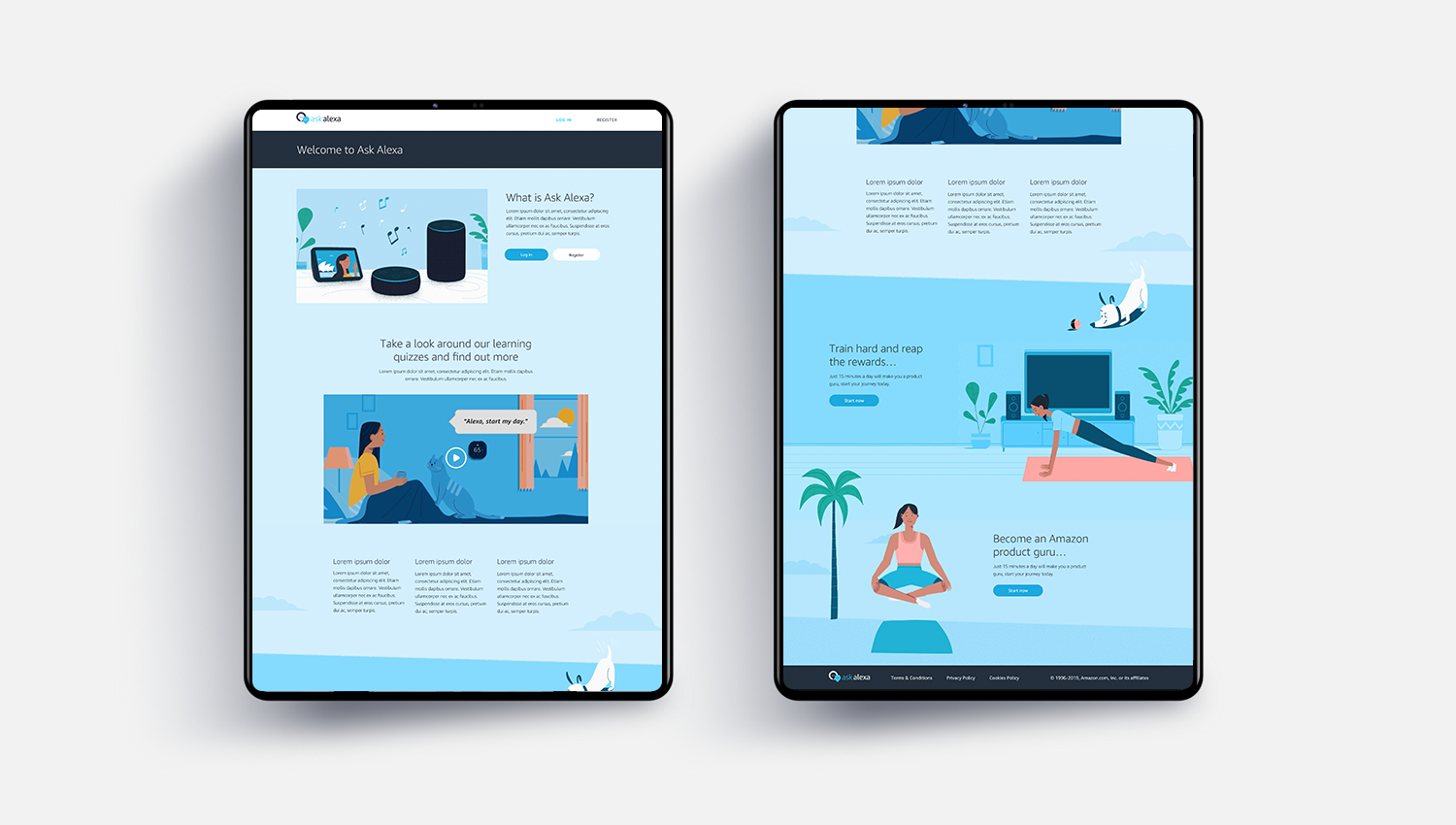
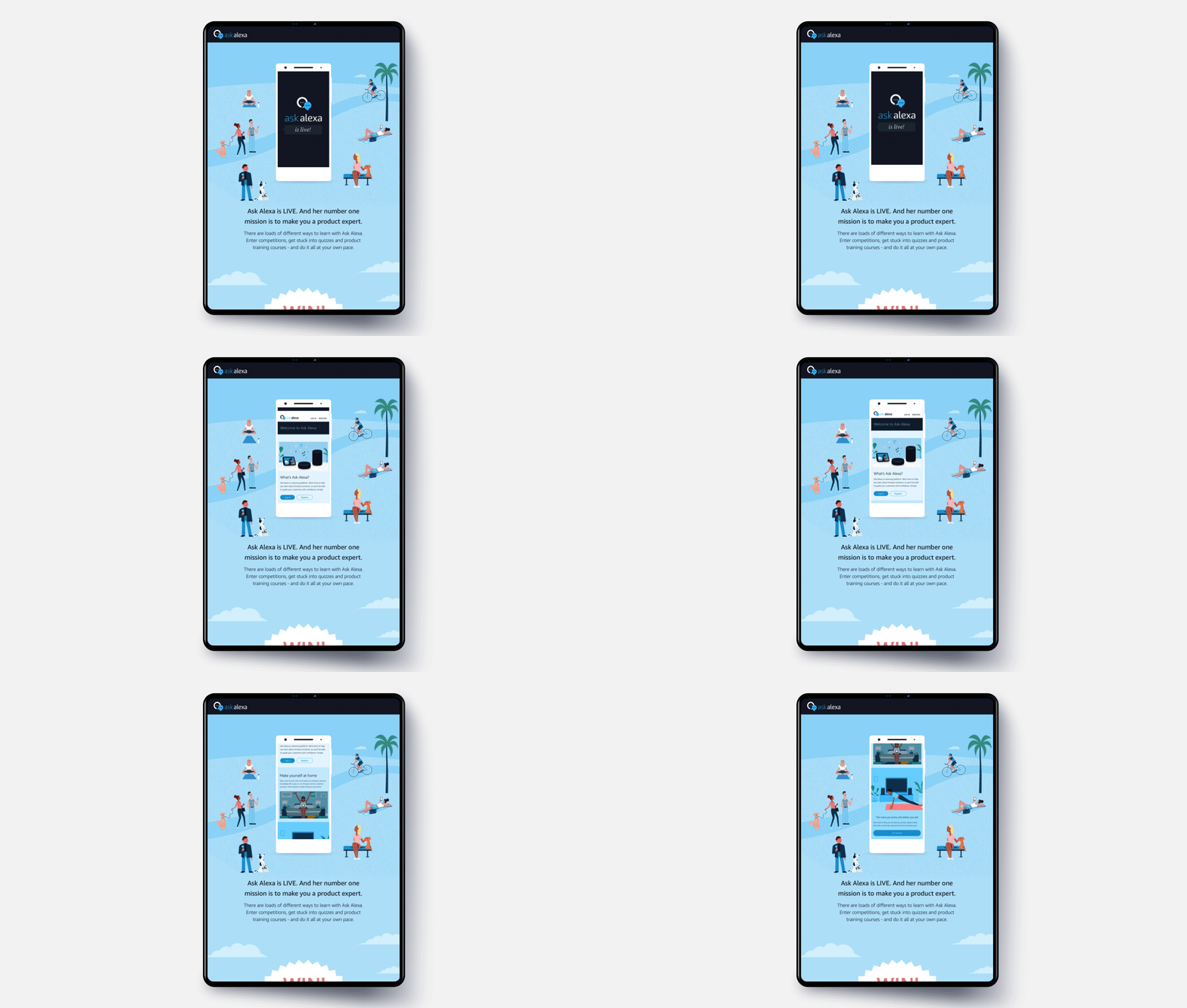
Ask Alexa Landing Screen
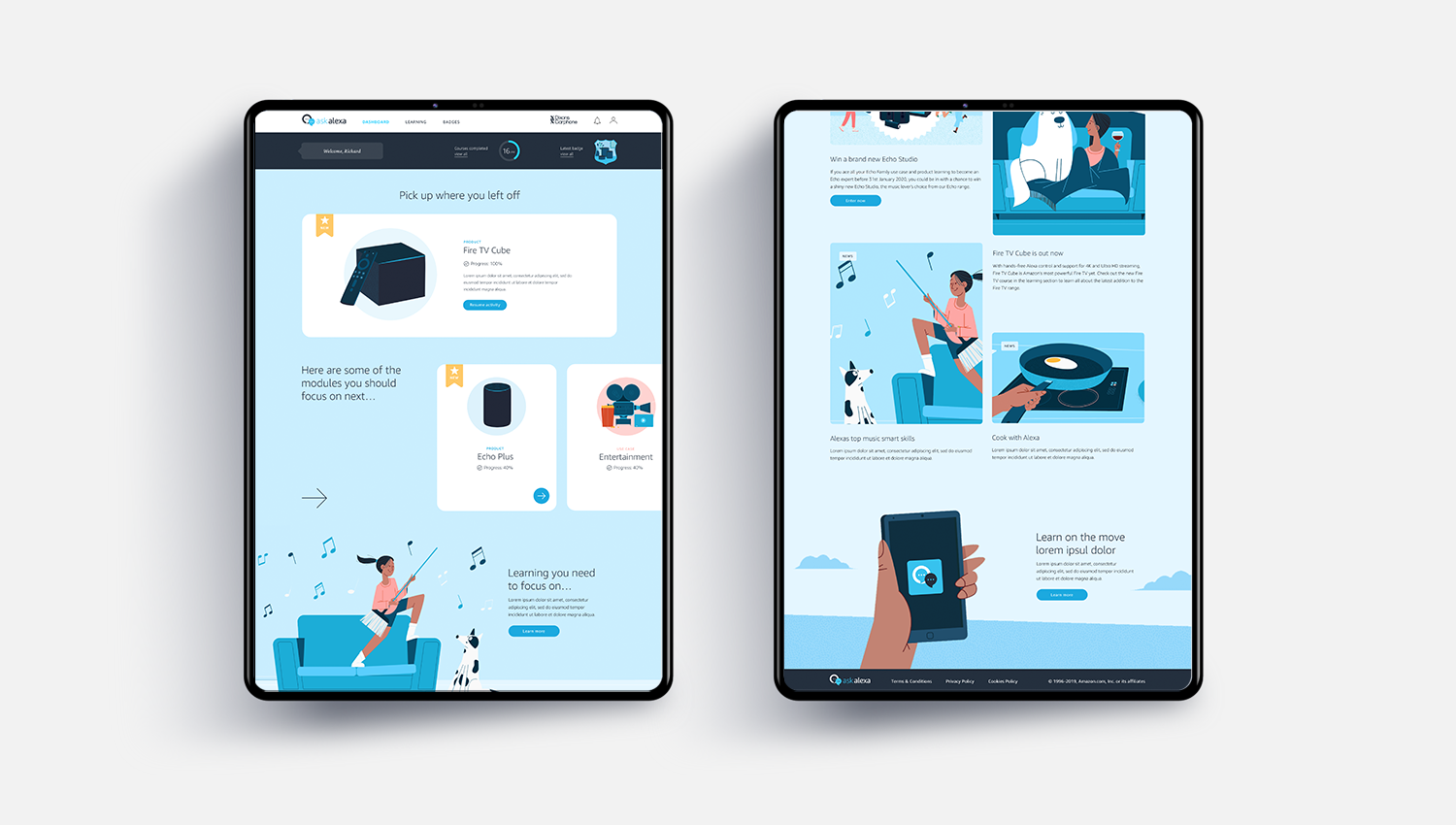
Ask Alexa home screen (iterated based on user feedback)
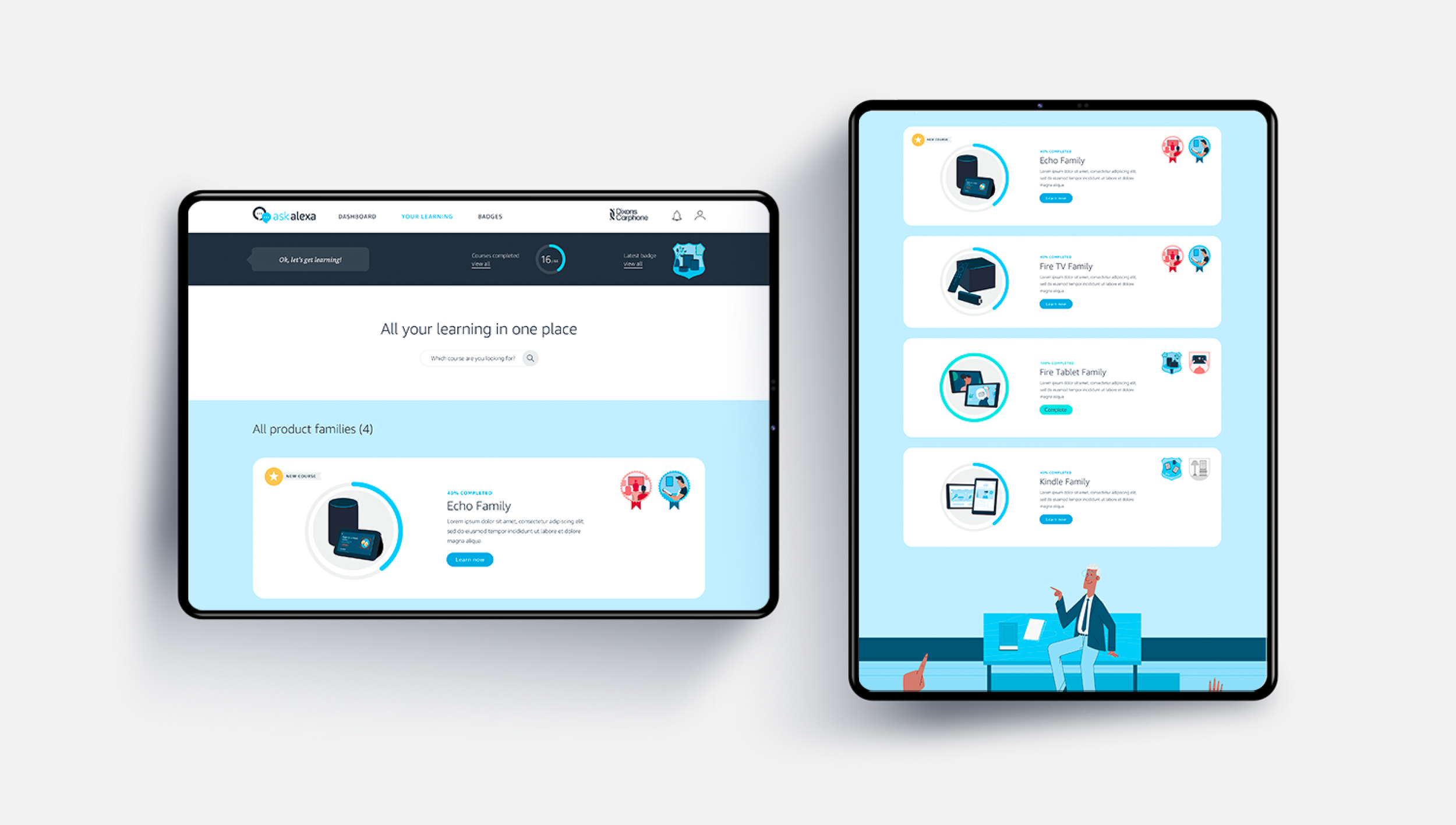
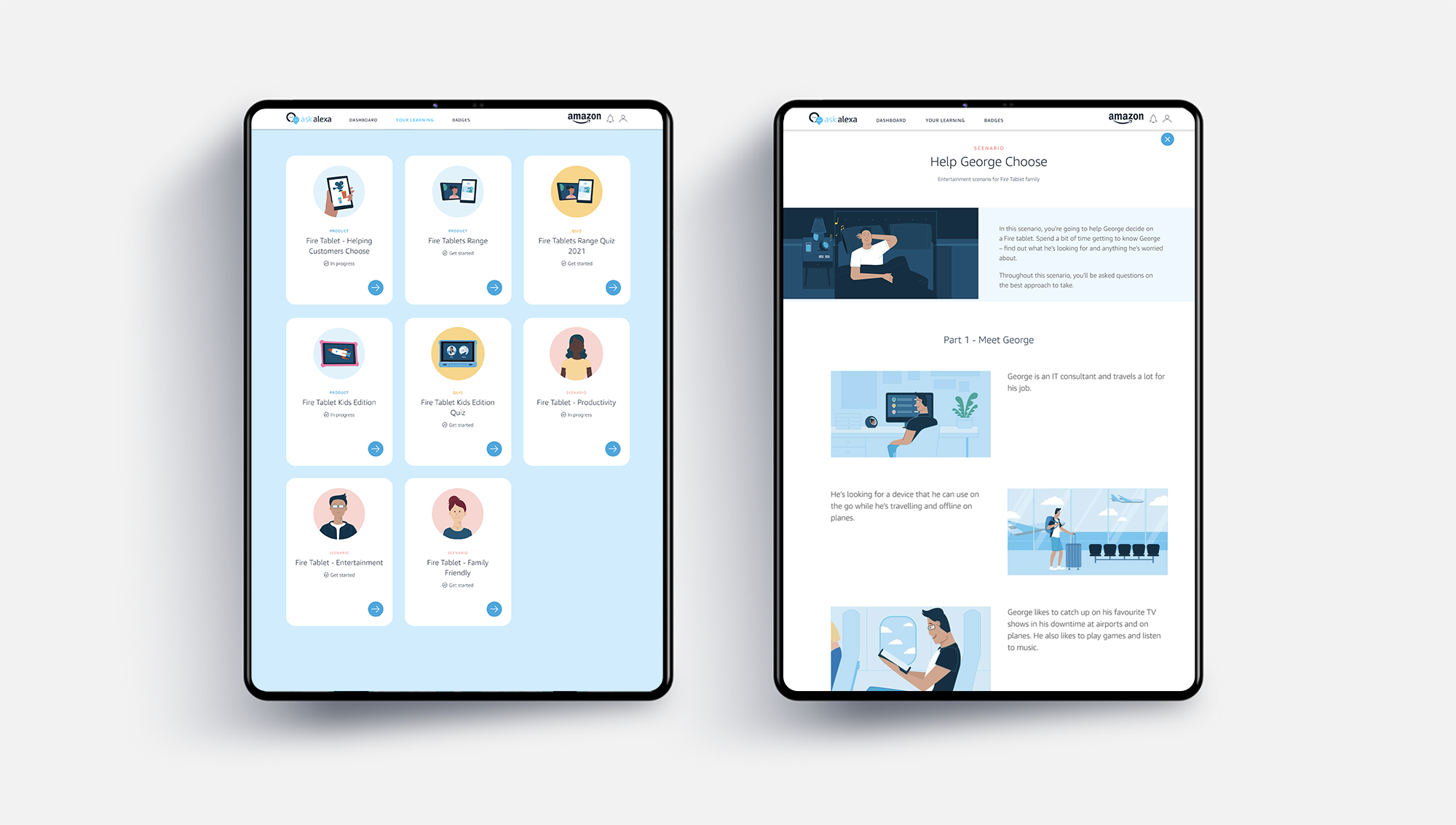
1. Fire Family Courses Screen 2. Learning content - Scenario module
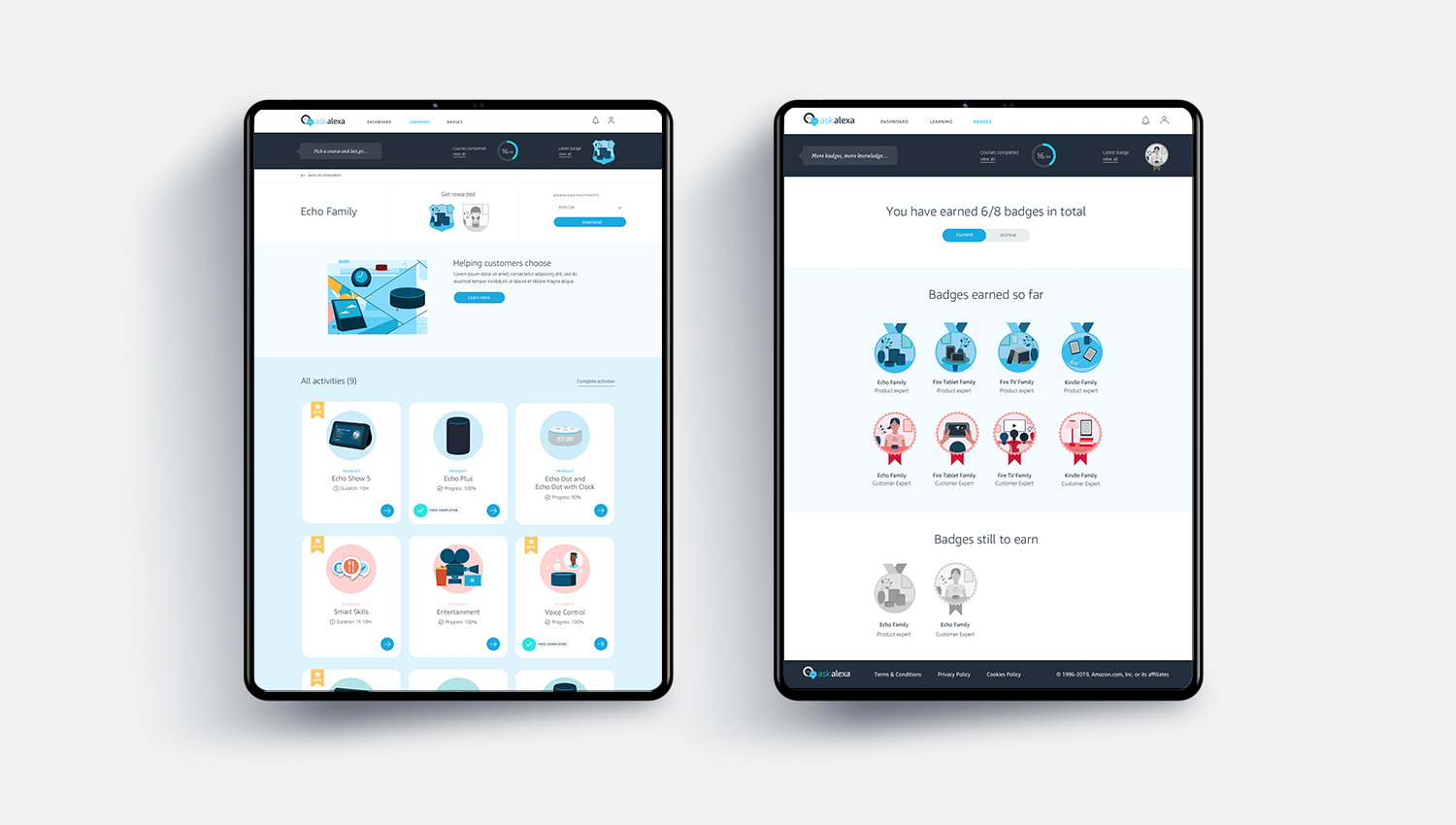
1. Echo family learning modules screen 2. Badges / rewards screen
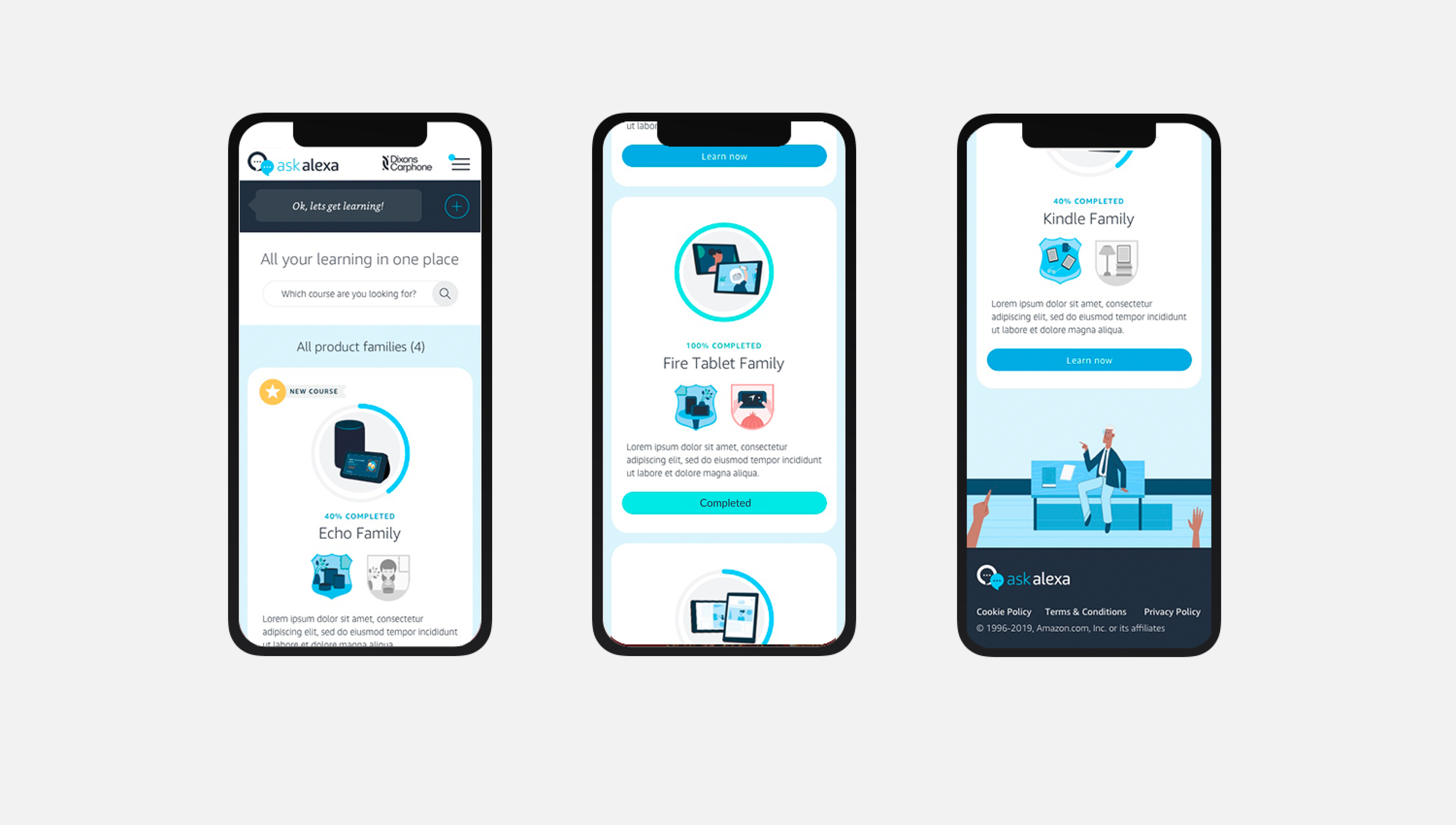
Art direction & brand guidelines
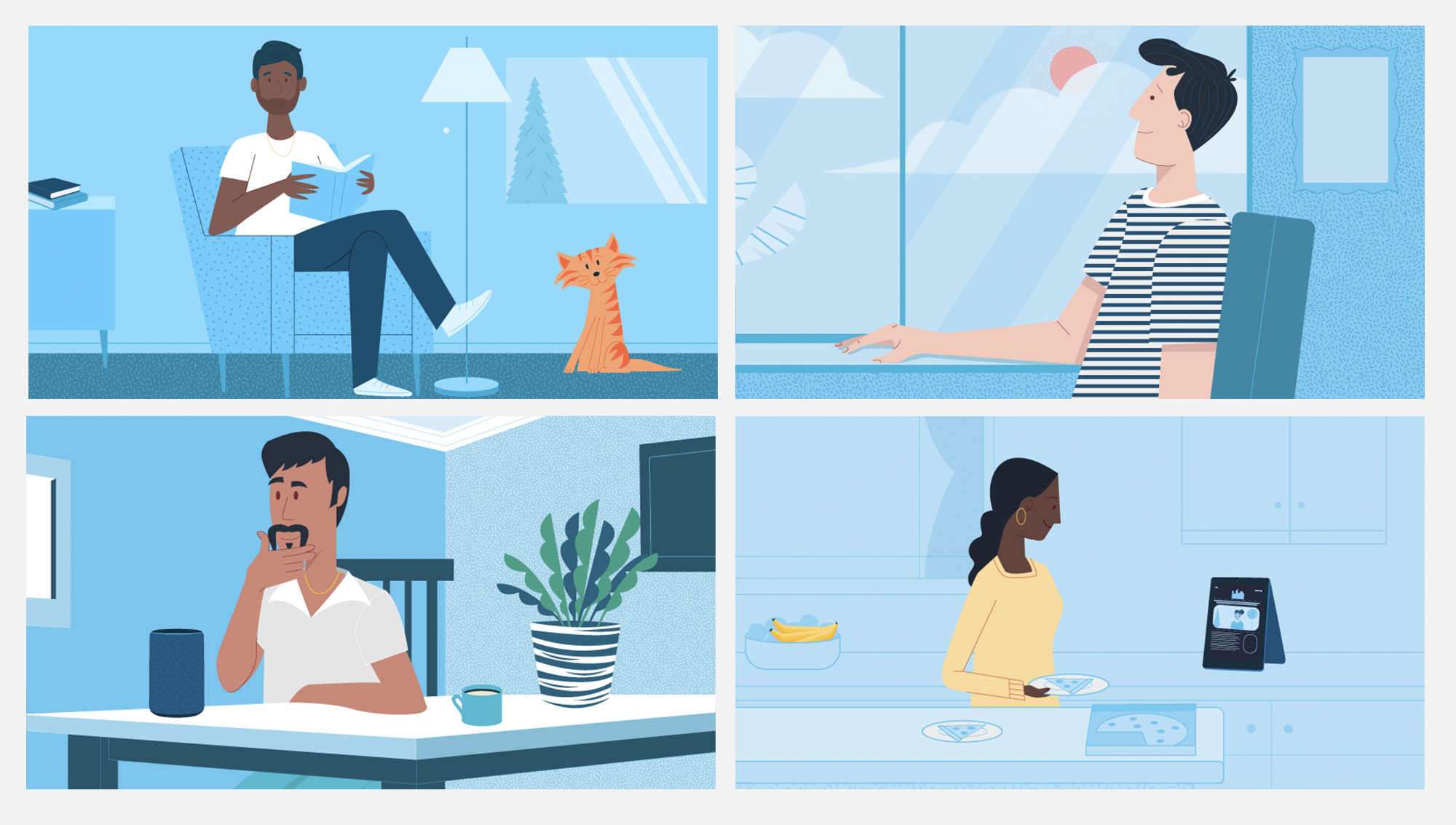
Colour palettes and fonts aligned with Amazons main brand. The illustrative style was created in house where I worked closely with an illustrator (and learning content designer) to create scenes and characters that aligned with both the content story and Amazons inclusive principles.
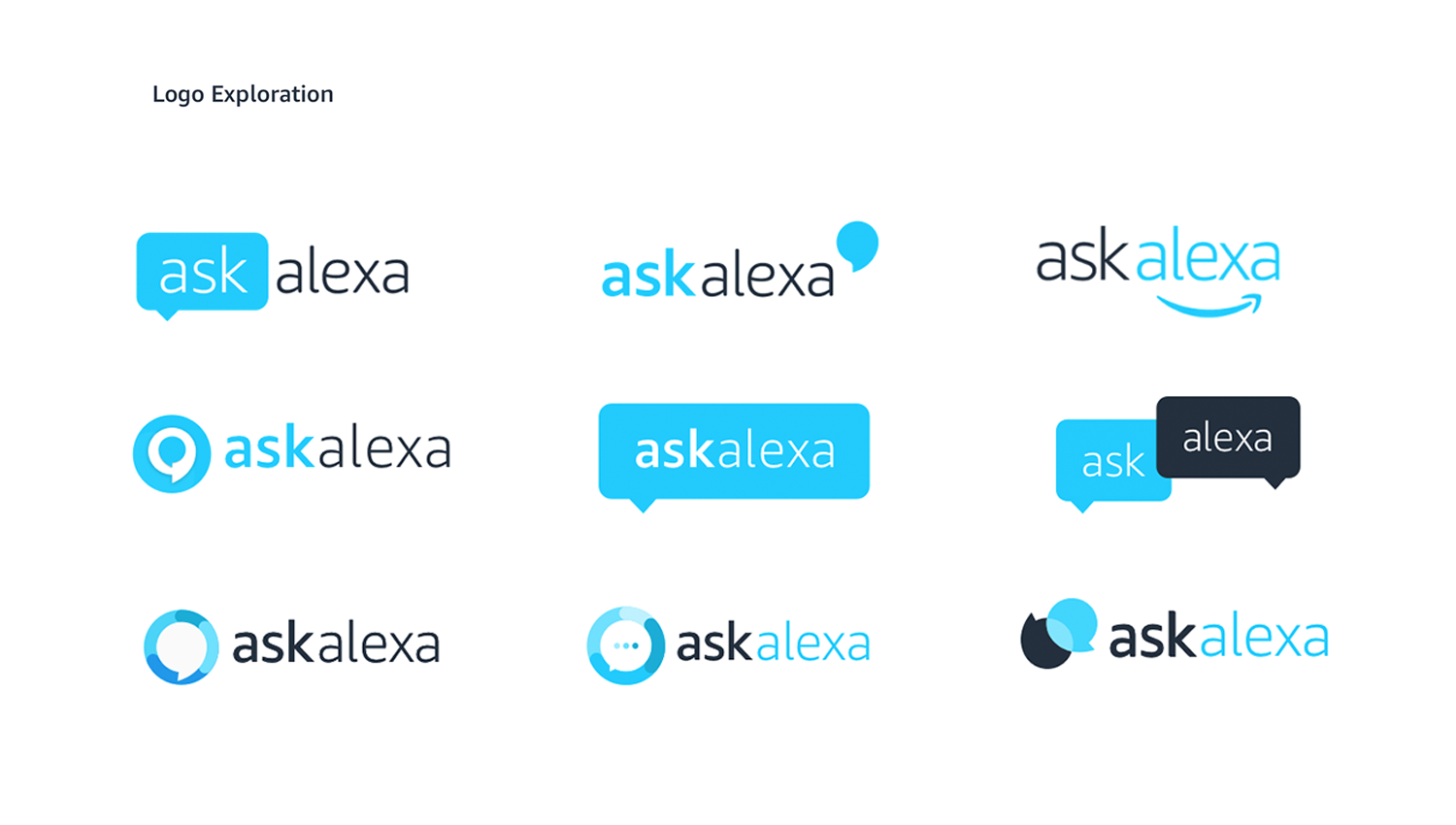
Finally I designed the Ask Alexa marque which was signed off across the various areas of the company before going live.
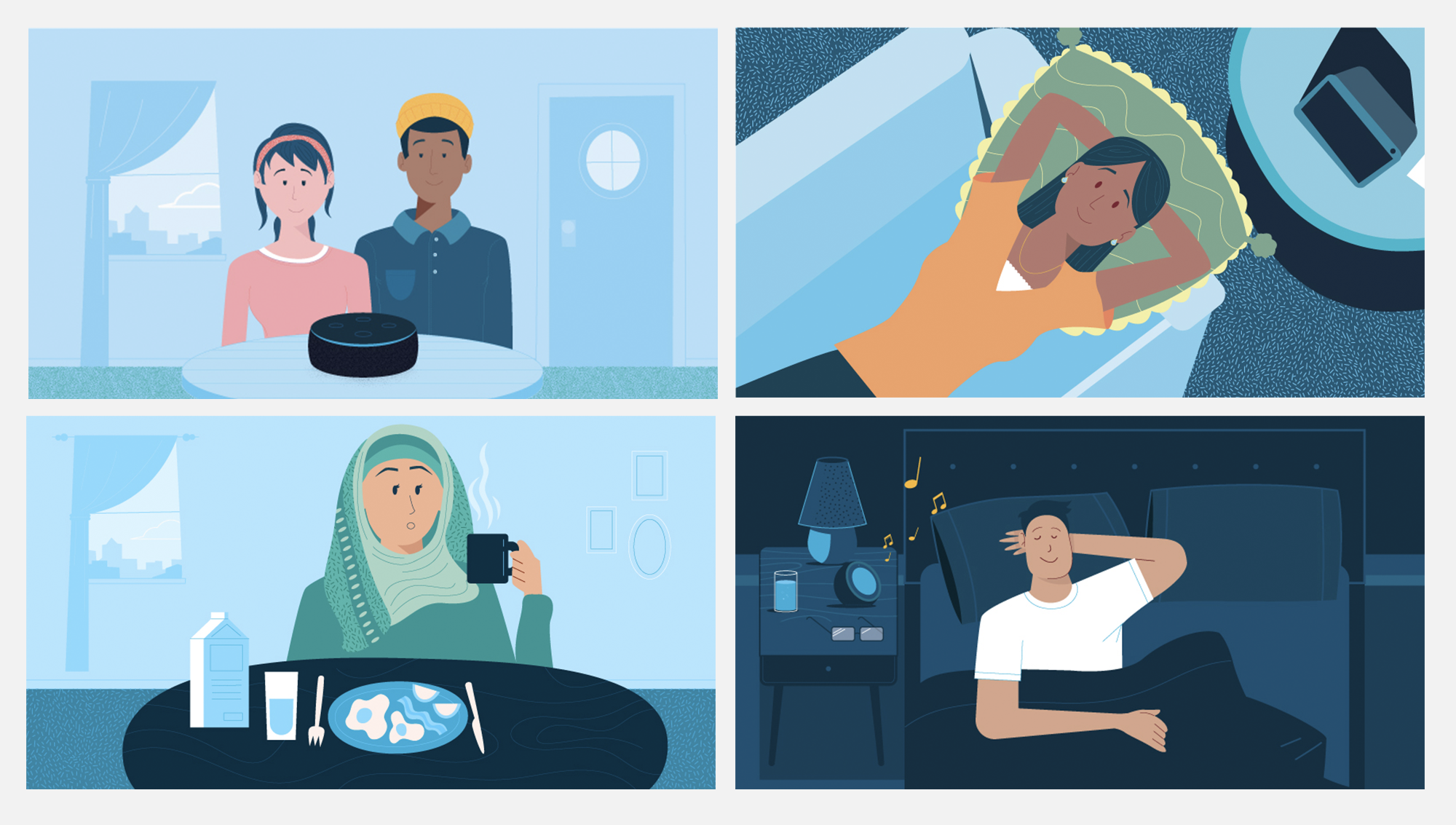
Art direction. Working with a learning content designer and our in-house illustrator to map out learning journeys and create a range of characters and scenarios.